


It’s easy to take a subject like attention for granted. But in terms of communication and explanation, it’s essential. Why? Because nothing can be explained or understood without it. By understanding the gatekeeper, we can craft explanations that make it through the gate.
Quick Video Explanation
The video below is a 2.5-minute summary of the article below. Some will find the visuals and animations easier to grasp than text.
What Do We Know So Far?
Last week, we looked at the work of David Broadbent, who was one of the first researchers to use scientific experiments to understand the mind. His work on attention established a few big ideas:
The mind applies filters. Some information is filtered out of our experience before we are aware of it. In a room with multiple conversations, the mind automatically ignores most of them.
The mind has a bottleneck. When channels of information compete for attention, only one can pass through at a time. It’s impossible to process two conversations at once. You have to listen to one, then the other, to remember anything.
Signal strength matters. The mind selects channels based on physical characteristics first; the clearest, loudest signals get attention. The person in front of you easily gets your attention.
What makes these findings so powerful is their reach. This isn’t an anecdote or special case. This is something fundamental about the human mind: we evolved mechanisms to manage overwhelming amounts of information.
But these early findings were also incomplete. Broadbent did important work, but it was only the beginning.
A Knob or a Door?
Broadbent saw attention as all-or-nothing. If a signal didn’t get attention, it was blocked, like a door that is either open or closed.
Anne Treisman, a cognitive psychologist at Oxford, noticed something about Broadbent’s experiments using dichotic listening. Subjects who were focused on one channel could remember fragments from the other channel. This was a hint that attention wasn’t all or nothing. It was a matter of degrees.
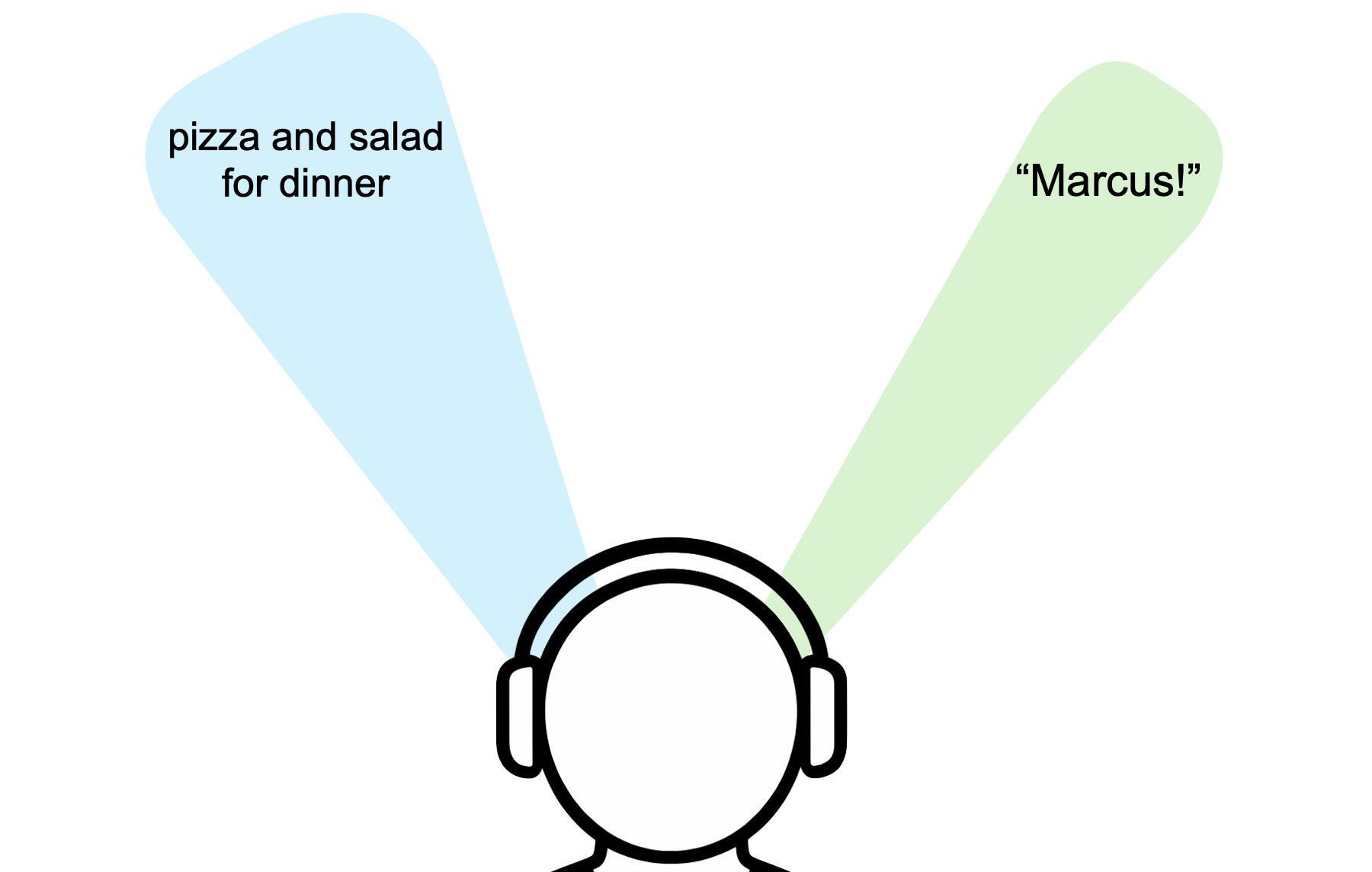
Treisman showed, through similar experiments, that attention is more like a volume knob that can be turned up or down. The competing signals don’t go away; they just appear at lower volume, which she called “attenuation”.
Why does this matter? Because it jump-started a new idea: some types of information can break through focused attention. By studying what breaks through, we can understand how the mind prioritizes attention.
An Improved Method
Treisman also saw a problem with the design of Broadbent’s experiments. She asked: How do you know that someone is truly paying attention to something in the lab?
She solved this with a method invented by Colin Cherry called “shadowing,” which forced subjects to repeat what they heard in headphones in real time.
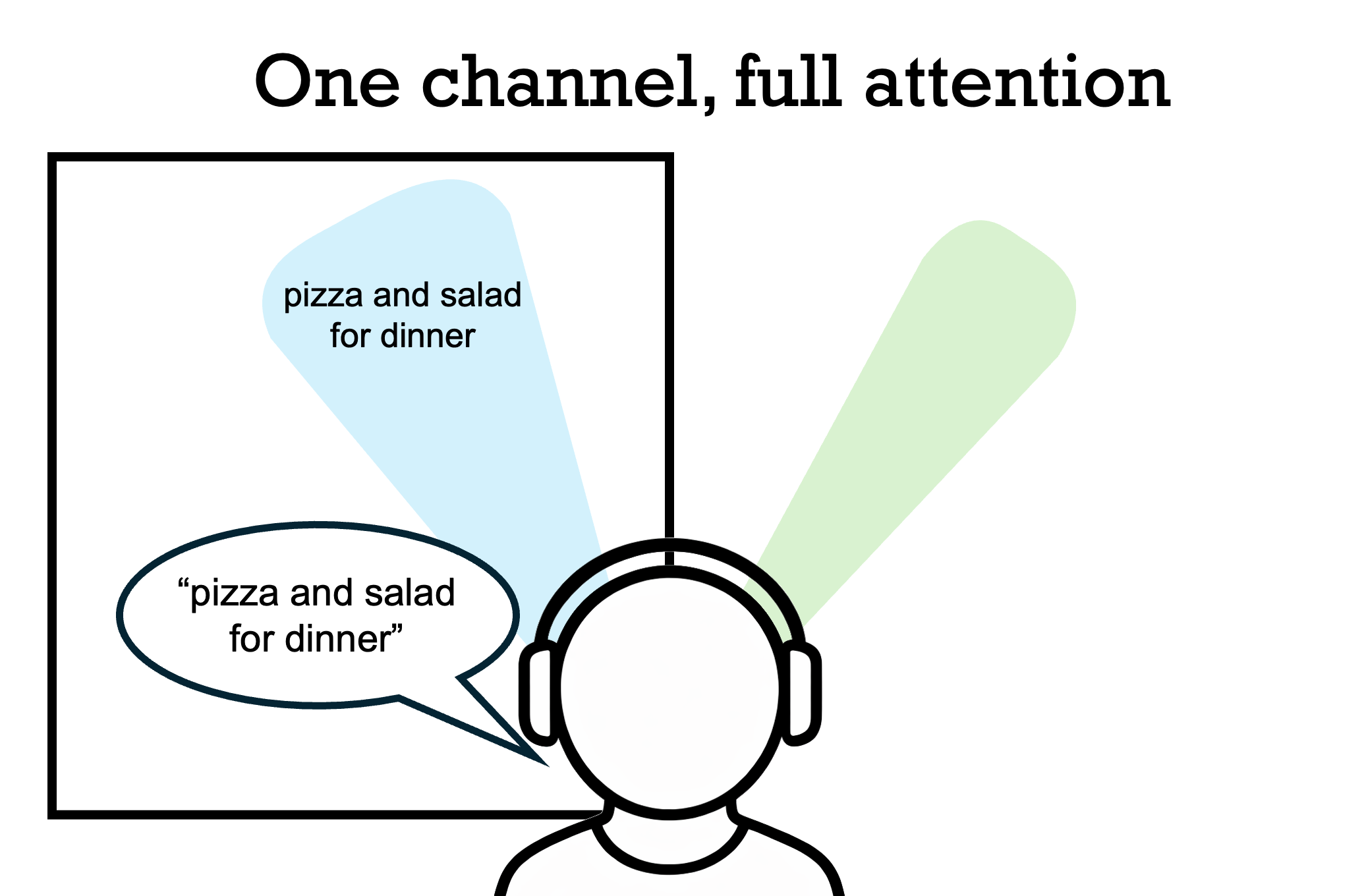
This was huge. By forcing them to speak in real time, she could ensure their attention was consistently held on a single channel. This created a control for the experiment. With this control in place, she could introduce other audio signals and measure which ones broke through attention.
“I Heard My Name”
Dichotic listening combined with the shadowing method created a reliable model for research. Soon enough, she noticed something fascinating.
While subjects repeated what they heard in one channel, she introduced a variety of different inputs in the other ear. These attenuated signals were often ignored, but some reliably broke through attention and could be recalled later.
For example, she noticed subjects could recall hearing their own name while focused on another channel. This “own-name effect” became well studied in cognitive science, and her work provided the model that explains it: The person’s name, in a secondary channel, was not ignored by the mind, but sensed in the background.
The big idea is simple: Some information can break through focused attention.
Meaning Matters
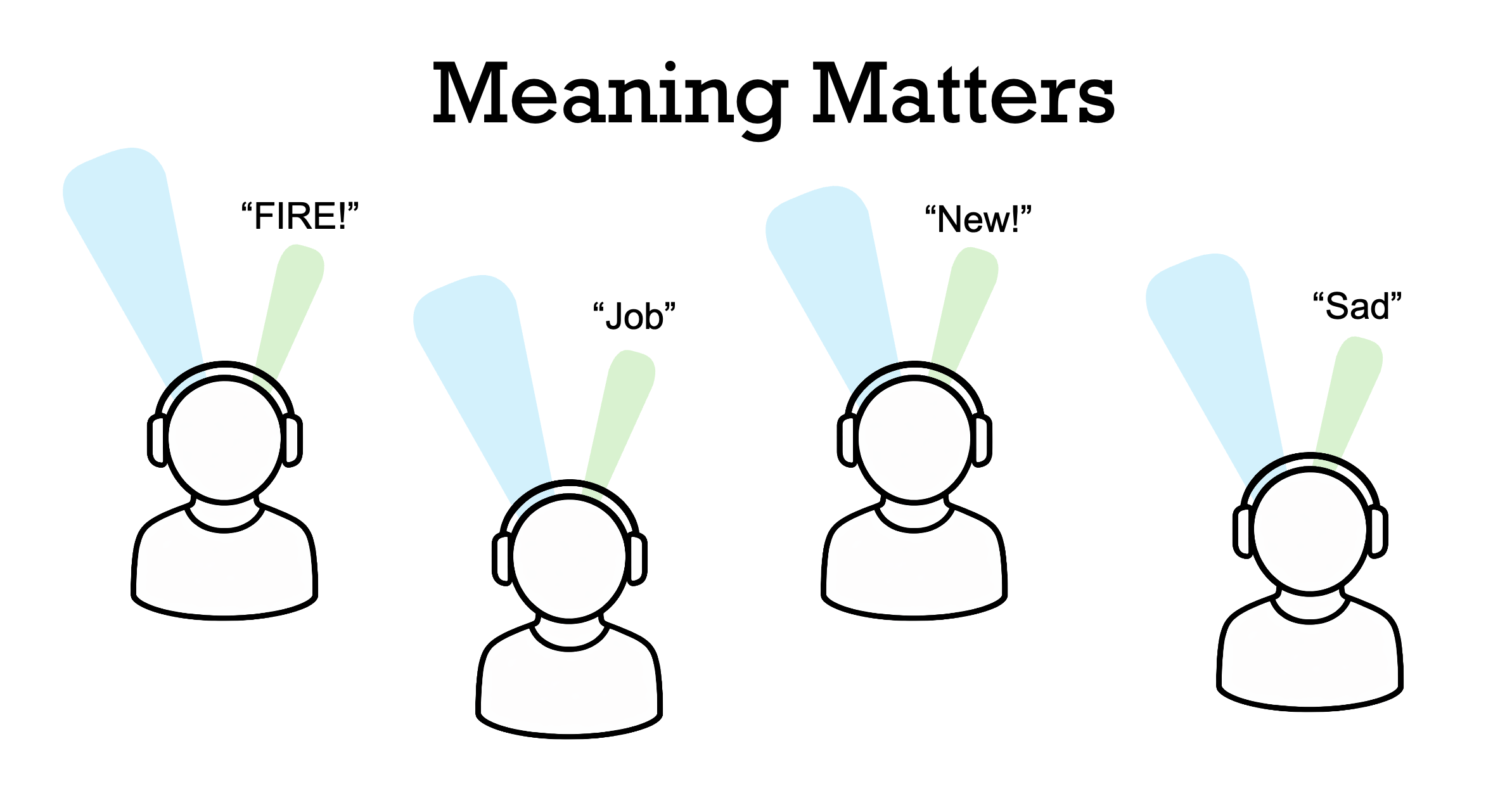
Treisman’s work inspired other scientists to continue testing the idea that our attention is flexible and can be refocused. This work established that meaning matters. Information that is meaningful for the subject, like hearing their name, can break through.
Researchers found that certain categories of information reliably capture attention, including:
Signals of potential threat
Information related to current goals
Unexpected or novel information
Emotionally charged words
These findings have real power because they are default settings we all share. Even if we’re focused on something else, our minds can be distracted when meaningful information is introduced. This is as true in the office as it is on the savannah.
Want a real-world example? Think about what happens when your phone buzzes. It breaks through your attention almost every time.
Attention is Universal, and Personal
We all pay attention to what is clear and obvious around us. But that attention can be refocused when we hear something meaningful.
The challenge is that meaning is not consistent across people. We all have experiences, personalities, and biases that impact where our attention is naturally focused, and what kind of information can break through it.
The Lessons for Explainers
As we’ve discussed, attention is required. Start by reducing distractions, making your channel the only one available, and making sure it’s clear.
Anne Treisman’s work adds another layer. If you want to ensure that you earn attention, understand that some information can break through focused attention. By attaching your message to what is meaningful to your audience, you have a better chance of earning their attention.
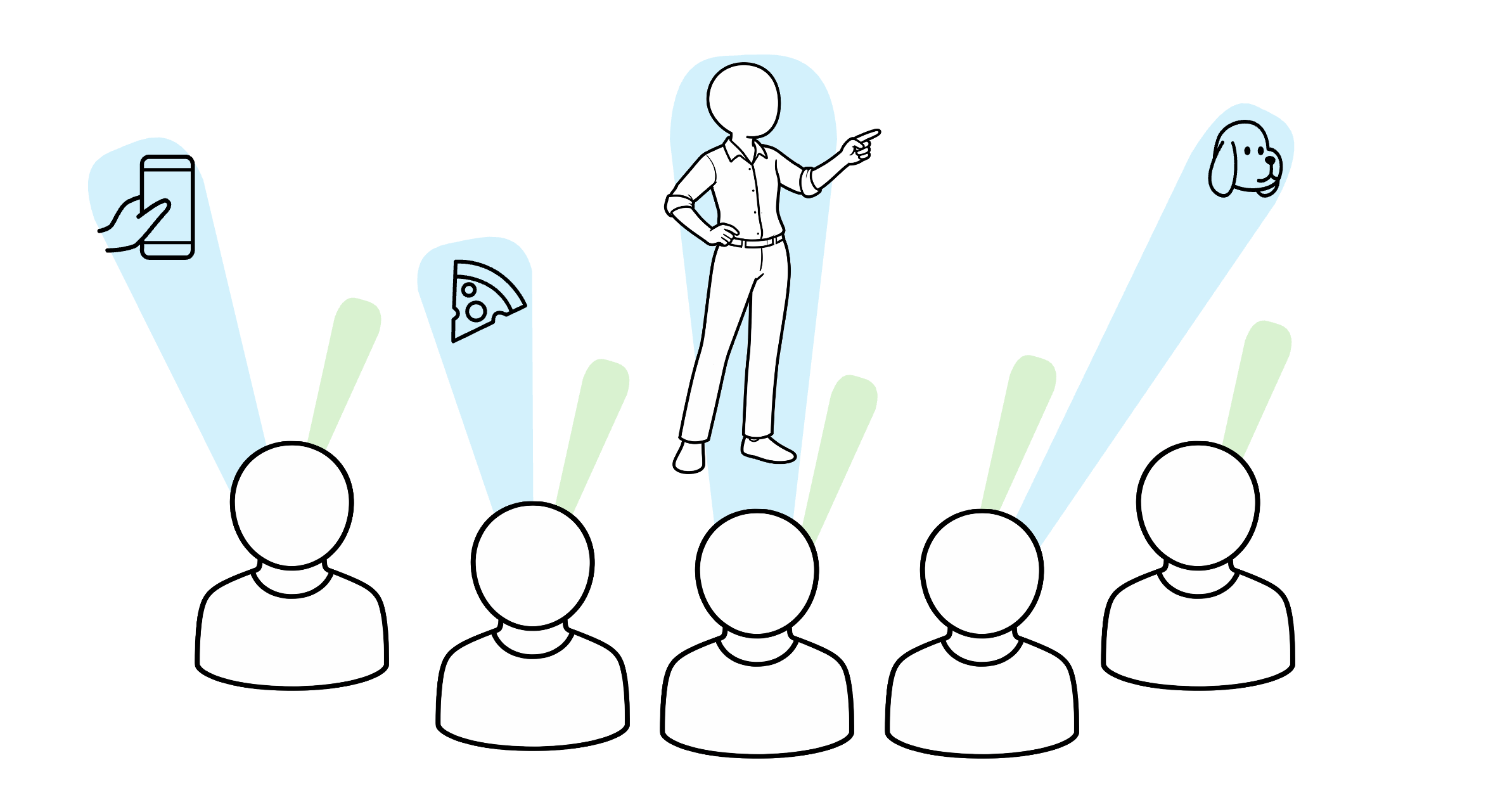
It’s up to you to identify what information will connect to their sense of threats, goals, novelty, and emotions, for example. What can break through?
Olivia’s Experience
Now we have a clearer picture of what Olivia experienced in the doctor’s office. As we saw in previous posts, she faced multiple distractions and assumed she could remember all the advice from her doctor. It was an illusion.
Only one piece of advice made it into her long-term memory: eat more fiber.
Why? It started with attention. Her doctor provided a clear signal full of meaning. The fiber advice broke through everything else because it surprised her, represented a threat to her health, and connected to her goal of living a long life.
The Gauntlet and Attention
Attention is the gatekeeper of the mind. Nothing has a chance to enter without first earning it. In the last few posts, we’ve established a few big ideas from the science of attention.
Attention happens without our control. The mind automatically filters what we encounter.
When signals compete for attention, we can’t process them at the same time. Multitasking is a myth.
Our attention can be influenced by meaningful signals. We automatically shift attention to things that matter to us.
Everyone’s version of meaning is different, which means we have to anticipate what kinds of signals will break through to our audience.
If You Enjoyed This Post
Please consider hitting the ♡ button below (it helps others find it)
I’d love to hear from you. Consider leaving a comment.
Consider sharing it with a pal.