


Read to the end to meet my dog, Piper.
You’ve probably heard this phrase, often attributed to Albert Einstein:
“If you can’t explain it simply, you don’t understand it well enough.”
It’s not clear that he ever said it, but it captures a compelling idea nonetheless. To me, it brings up a couple of big questions:
What does it mean to understand something well?
How does that understanding translate to a simple explanation?
Like all things regarding the mind, there is hidden complexity because you can’t see understanding happen. It’s a very personal phenomenon.
However, there are four elements of understanding that I think are important.
Four Elements of Understanding
The elements below should apply to most things you can imagine. A person, idea, machine, process, object, animal, etc. That’s why this is powerful.
This is my own framework and is not based on a specific study, researcher, etc. However, it is informed by research that we’ll cover soon.
The four questions below can test the limits and reach of your understanding.
What is it?
You should be able to identify it. You should recognize it and distinguish what makes it unique among similar items. A bicycle is a form of transportation. It is different from a motorcycle and a unicycle.

Why does it work as it does?
You should be able to recognize the connections and circumstances that explain why it works or what is happening. The human pedals, the chain transfers energy to the back wheel, and the bike moves forward. There is often a system or process to understand.

Where else does this work?
You should be able to apply your understanding to other examples and explain what they have in common. By understanding a bike, you can explain a garage door opener in similar terms: A chain is transferring energy from the motor to the door. Understanding a bike opened your mind (and the door).


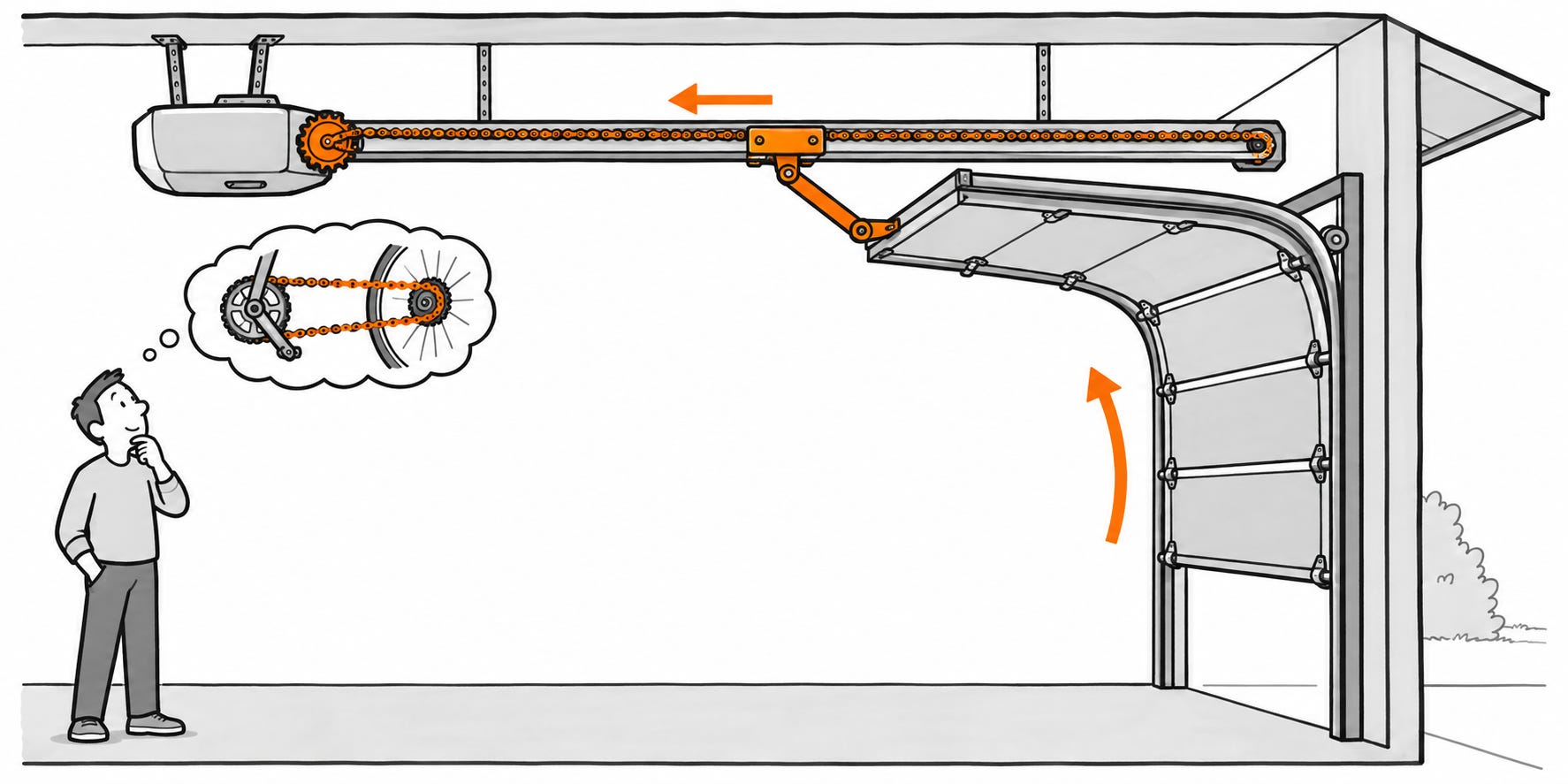
What does it help me do?
You should be able to apply your understanding to something specific, like solving a problem. If you observe that the pedals turn, but they don’t drive the back wheel, you know to check the chain. Your understanding of the system helped you see a missing connection.

The Test: My Dog Piper
If these four elements are indeed helpful, we should be able to test them. We’ll start with my dog, Piper, an 8-year-old Bernedoodle. Let’s try understanding something Piper does: whining at the door.
What is it?
Piper is whining at the door.
Why does it work as it does?
Whining could mean many things. To understand, I consider the context. What are the relationships and circumstances that explain what’s happening? I think about her normal routine and the last time she went out.
Where else does this work?
If I understand that Piper whining at the door may mean she needs to go out, then what does it mean when she whines by her food bowl? When did she eat last? Is it her normal mealtime? This new context provides meaning and clues as to what she needs.
What does it help me do?
My understanding of her whine helps me decide what to do next. If she whines in multiple contexts, I can make predictions and test my interpretation. I can decide to take her out and observe her actions, which extends my understanding.
Here we see that Piper’s whine alone doesn’t tell me exactly what she needs. The meaning comes from the situation and context, which help me interpret her whining and take action. In context, I can form a plausible interpretation and check it with observation.
How This Leads to Simpler Explanations
This post started with a quote:
“If you can’t explain it simply, you don’t understand it well enough.”
This relates to a fundamental idea in communication: you, the explainer, must understand the subject yourself. The four questions above can expose what parts of the subject you don’t yet understand. Filling these gaps can improve your explanations.
To explain how pedaling drives the back wheel, you need to understand those connections yourself.
Further, the four questions can help you evaluate what needs to be explained. A useful explanation doesn’t have to answer all four. You can ask: What is this audience missing? What part of this concept needs a better explanation?
An audience who understands the parts may need to see how they work together. An audience who understands how the parts work together may need to know how to apply that knowledge.
Your Turn
Pick a subject and apply the four questions. Consider how your answers help you fill a gap, see a new perspective, or identify a new way to explain the subject.
What is it?
Why does it work as it does?
Where else does this work?
What does it help me do?
I’d love to see your interpretations. Reply in the comments…
Also, here’s Piper, not whining.

If You Enjoyed This Post
Please consider hitting the ♡ button below (it helps others find this post)
I’d love to hear from you. Leave a comment, and we can chat.
Know someone who would enjoy this? This post is public, so feel free to share.