


We’ve been following a long thread in this series that illustrates what happens when an idea moves toward memory. It looks something like this:
Sensing —> Attention —> Context —> Gist —> System 1 and System 2 —> Working Memory —> Chunking —> Cogntive Load
Note: The path above isn’t linear. There aren’t hand-offs at each stage. Many of the processes happen simultaneously and interact with one another.
That being said, the path sets the stage for processing something we need to solve problems: understanding.
A Shift in Focus
We’re now entering a new phase with a new question:
What does it mean to understand an idea?
Think about times when you’ve had an aha! moment where ideas that seemed separate suddenly came together. Consider:
Understanding how the pipes work under your sink
Seeing the magic of compound interest
Figuring out how to back up a trailer
Something changes in these moments. You may have understood the individual facts, but a gap remained: how those facts fit together and relate to one another.
The pipes under your sink become a system. Money, time, and interest become a process. The confusing feeling of backing a trailer becomes predictable.
The facts haven’t necessarily changed, but their relationships have become clear.
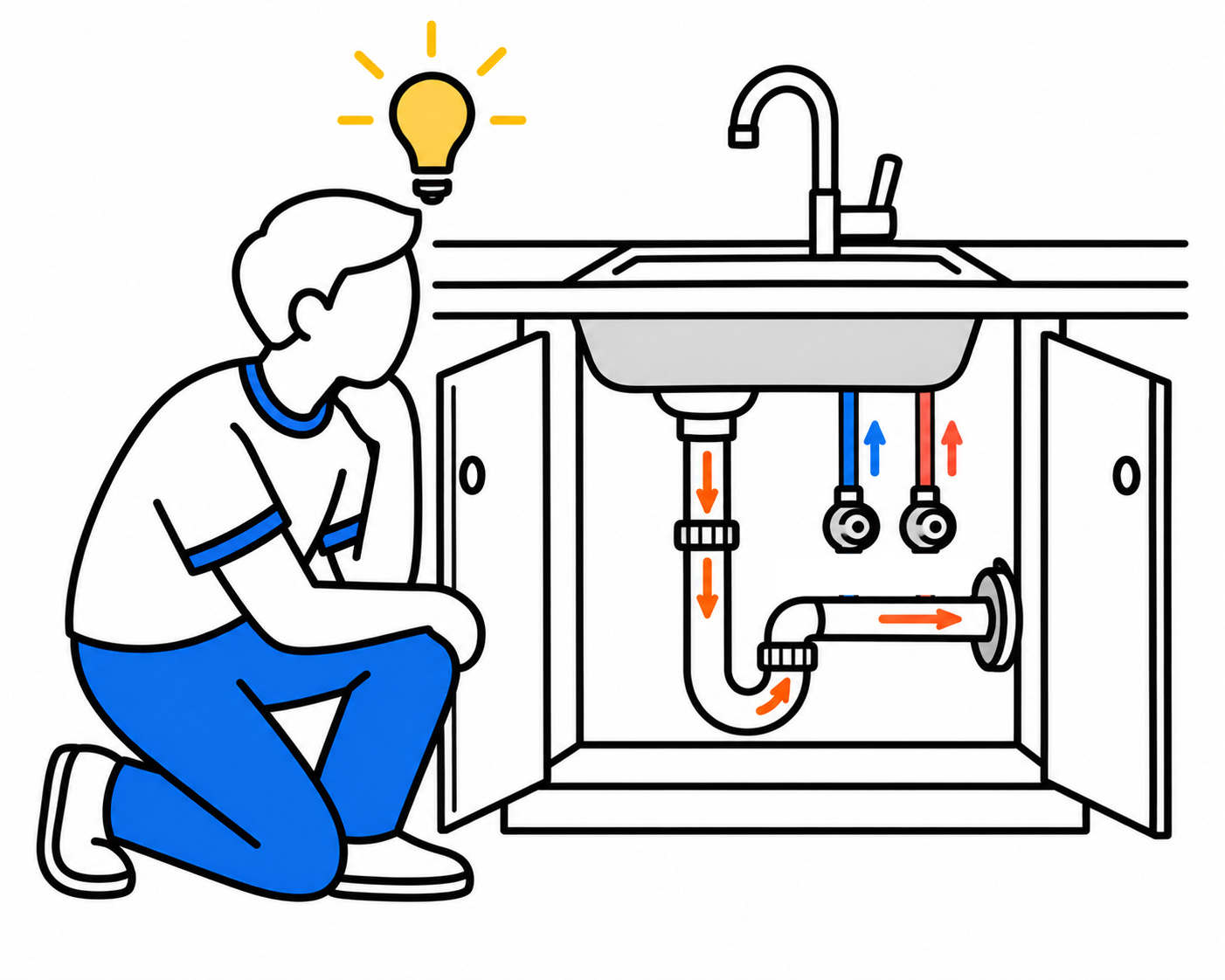
This is an important part of what we mean by “understanding.” The individual facts are helpful, but understanding often emerges when we grasp the bigger picture and the connections that make it work.
The big idea: Facts alone don’t necessarily produce understanding.
For our audience to understand something new, we must focus on how things relate, why they work as they do, and what to expect when things change.
In the next few posts, we’ll look at how the mind makes this possible. We’ll come back to chunks from a new perspective, look at the idea of schemas that help us organize related information, and mental models that help us reason about how something works.
We’ll see that memory preserves more than individual facts. It also preserves relationships between ideas.
These mechanisms help explain something fundamental about the mind and the role of explanation: new ideas don’t arrive in an empty mind. We understand them by connecting them to what we already know.
As we’ll see, this ability is extraordinarily powerful… and can often lead us astray.
If You Enjoyed This Post
Please consider hitting the ♡ button below (it helps others find this post)
I’d love to hear from you. Leave a comment, and we can chat.
Know someone who would enjoy this? This post is public, so feel free to share.