


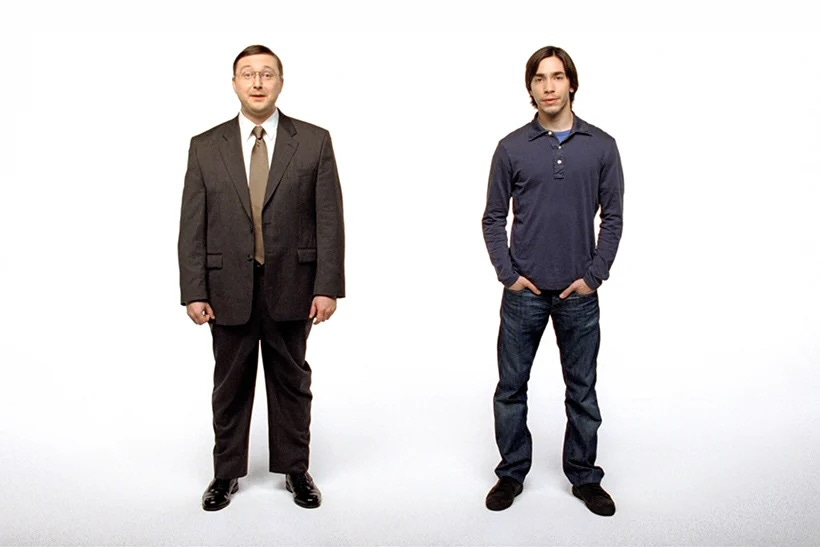
I started this newsletter in 2024 with a bit of advertising history in the form of Apple’s Get a Mac campaign. In over 66 television commercials, Apple captured a real, but rarely discussed dichotomy. The subtext: Apple is relaxed and cool, PCs are uptight and nerdy.
The Vibes Project was my way of asking: What explains this difference? Why are we the way we are?
This led to months of research on coolness and nerdiness in popular culture. I loved learning, but something was missing. I came to see that coolness and nerdiness are more like cultural labels, and labels don’t explain anything. I needed a more meaningful explanation.
Vibes provided a path to learning about neurodiversity and cognitive styles. I became fascinated with the idea that our brains are different, and those differences are an authentic part of who we are. We all process information differently, but assume we do it the same.
This seemed like a much better direction, and it quickly took over my research. I’ve spent months learning about cognitive science, psychology, and philosophy, and I’m just getting started.
As I wrote in the last post, this new direction connects to my work as an explainer. I saw opportunities to understand the mental mechanisms that lead to clarity and understanding: why an explanation works, or not.
For example, some brains automatically focus on details and build up to big ideas. For other brains, it’s the opposite. This leads to predictable patterns in miscommunication. What is clear to one person can seem confusing to another, and this isn’t a matter of intelligence, but how brains are wired. This is a well-documented finding from cognitive science we’ll cover soon.
Let’s consider the Mac and PC one more time.
From this new perspective, these characters don’t represent different attitudes or fashion choices, but brains with different cognitive styles and preferences. By understanding their styles, we can tailor explanations that work for them.
A New Name
I’m rebranding this newsletter, starting with the next issue. From now on, it will be called The Science of Explanation, and can be found at: ScienceOfExplanation.com.
Vibes will continue to be with us and become more practical. They will serve as a tool for thinking about how to explain to different kinds of brains. We can ask: how would you communicate with an Analyst compared to a Feeler?
This is a new direction in my professional life. It feels like I’ve discovered a useful new approach to something I’ve done for my entire career, and I’m just getting started.
The science of explanation is a subject full of rich stories and fascinating ideas that apply to you and your daily life. Going forward, you’ll see me learn in real time, and I invite you to join in. We’ll learn about how the brain turns information into knowledge, why explanations fail, and how to account for different cognitive styles. You’ll see, like me, that our differences are really opportunities.
If you know someone who might be interested in subscribing, please send them this post.
Done. I mean, sent the post. Can’t explain why. 🦋