


Let’s start with a scenario:
You arrive home with a new prescription that you need to start taking immediately. You remove the bottle from the bag and stare at the label. The stakes are high. If you don’t follow instructions, you could have serious side effects.
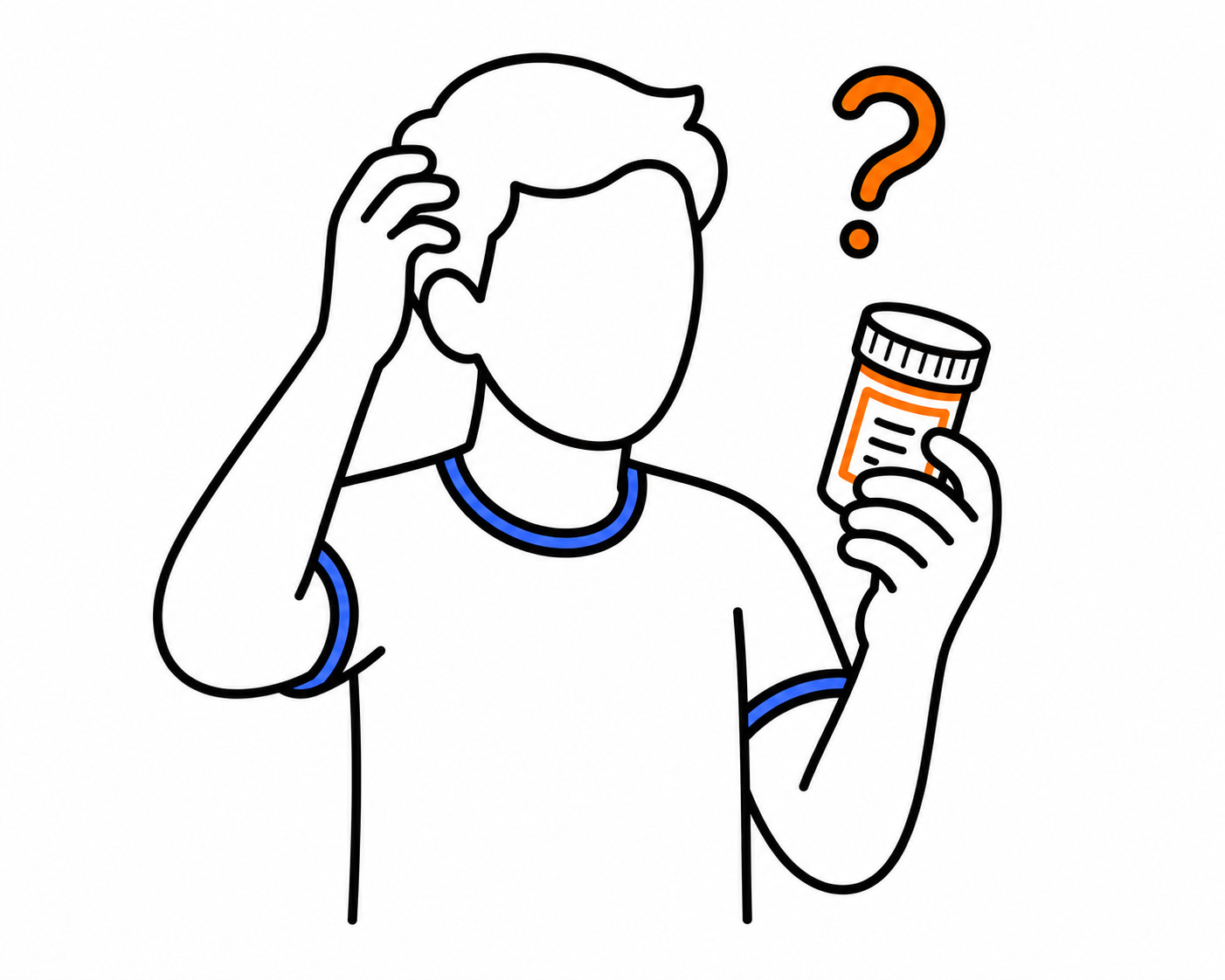
The label seems familiar, but it takes time to decode it all. In this simple example, you are confronted with two problems that must be overcome.
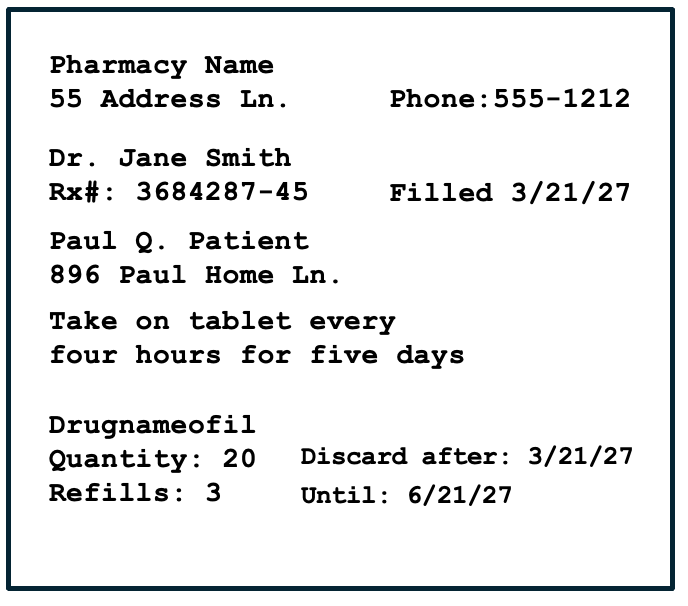
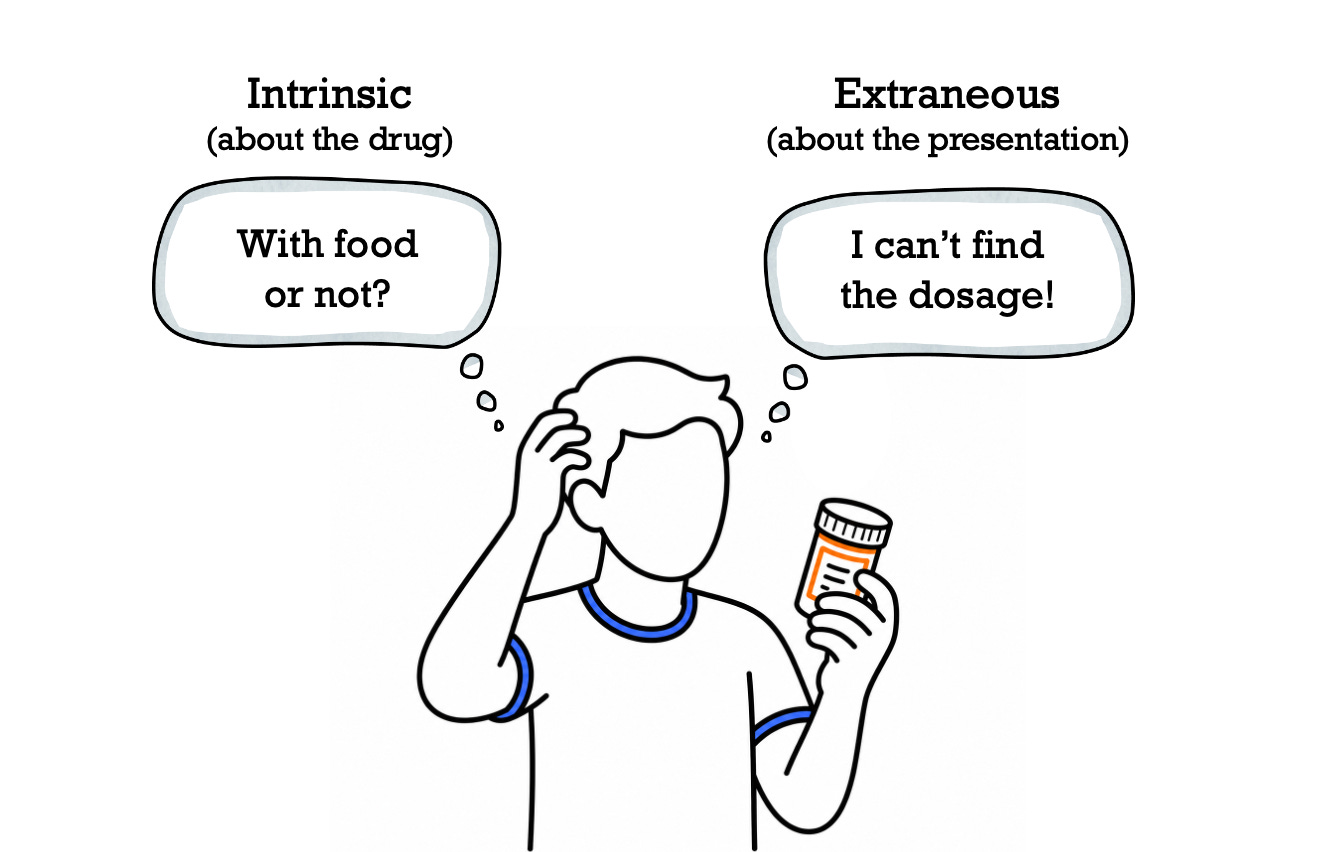
The first is the complexity of the subject. A new prescription comes with complexity that’s intrinsic to the task. You’ll need to understand instructions, dosage, schedules, and refills. How difficult this feels depends partly on what you already know.
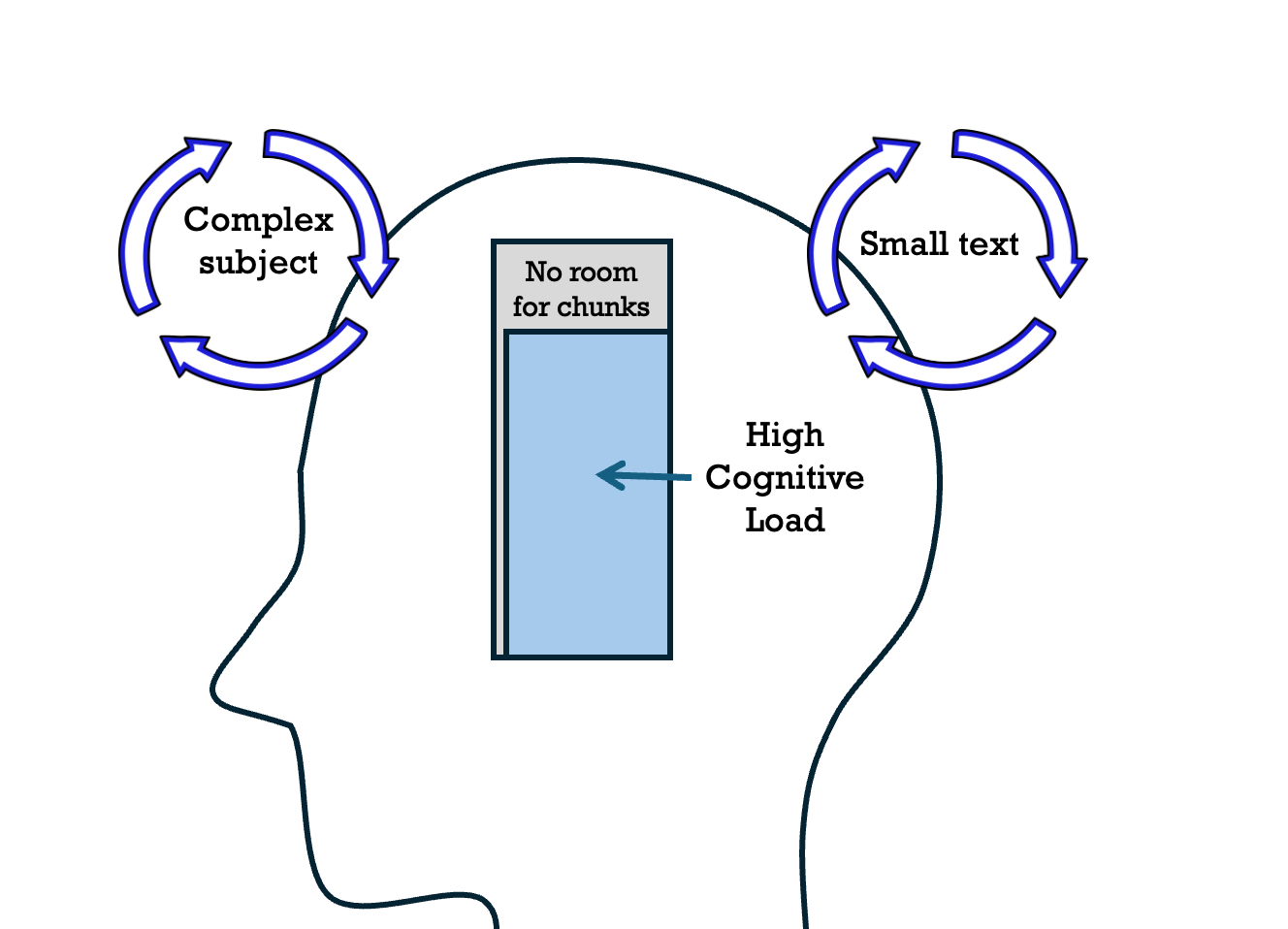
The second complexity is HOW the information is presented. A prescription label is legally mandated to contain specific information, which results in small text on a tiny bottle. You spend mental effort simply trying to read the words instead of understanding the ideas. This load is extraneous and is separate from the content.
This combination puts your mind under pressure. Think of working memory as a truck that can carry a limited load. If the load is bigger than the capacity, things start to fall off. The same is true with the mind. When we try to load too many things at once, it starts to make predictable mistakes.
Researchers refer to this as cognitive load. Every waking moment, our minds are being loaded with information that we try to understand.
Chunking and Cognitive Load
In recent posts, we learned about chunking: with practice and repetition, our minds start to process ideas in groups instead of individual items. Instead of processing thunder, lightning, and rain separately, we process it as a “storm.”
These chunks are how the mind works with limited resources. They compress detailed information into a smaller size that is easier to process. In some ways, this is what it means to “process” information. Our minds are chunking machines that are always looking for ways to organize information into meaningful groups.
The problem is that chunking requires free working memory. If the mind is under pressure due to complexity, there aren’t enough free resources for creating new chunks. So we read a dense scientific paper, but don’t remember any of it. New chunks were not created.
Big idea: High cognitive load = more difficult formation of chunks
Existing Chunks Also Relieve Pressure
Let’s imagine a scientific paper on dark matter in space. It’s written by PhDs for fellow researchers. As a non-scientist, you try to read it, but soon give up. The cognitive load of the academic language is too high; chunks don’t form. Working memory is under too much pressure.
Now consider that paper in the hands of a nuclear physicist. Dark matter is a different field, but this person’s academic training has led to chunks related to physics, math, academic language, notation, and more. Those chunks help reveal connections and context that are invisible to the novice.
In this example, the existing chunks of the nuclear physicist helped reduce the cognitive pressure and free up working memory. This is why what an audience already knows matters as much as what you’re trying to teach them. If you can predict what chunks are in place, you can lower the load and free up more processing.
Big idea: More existing chunks = lower cognitive load
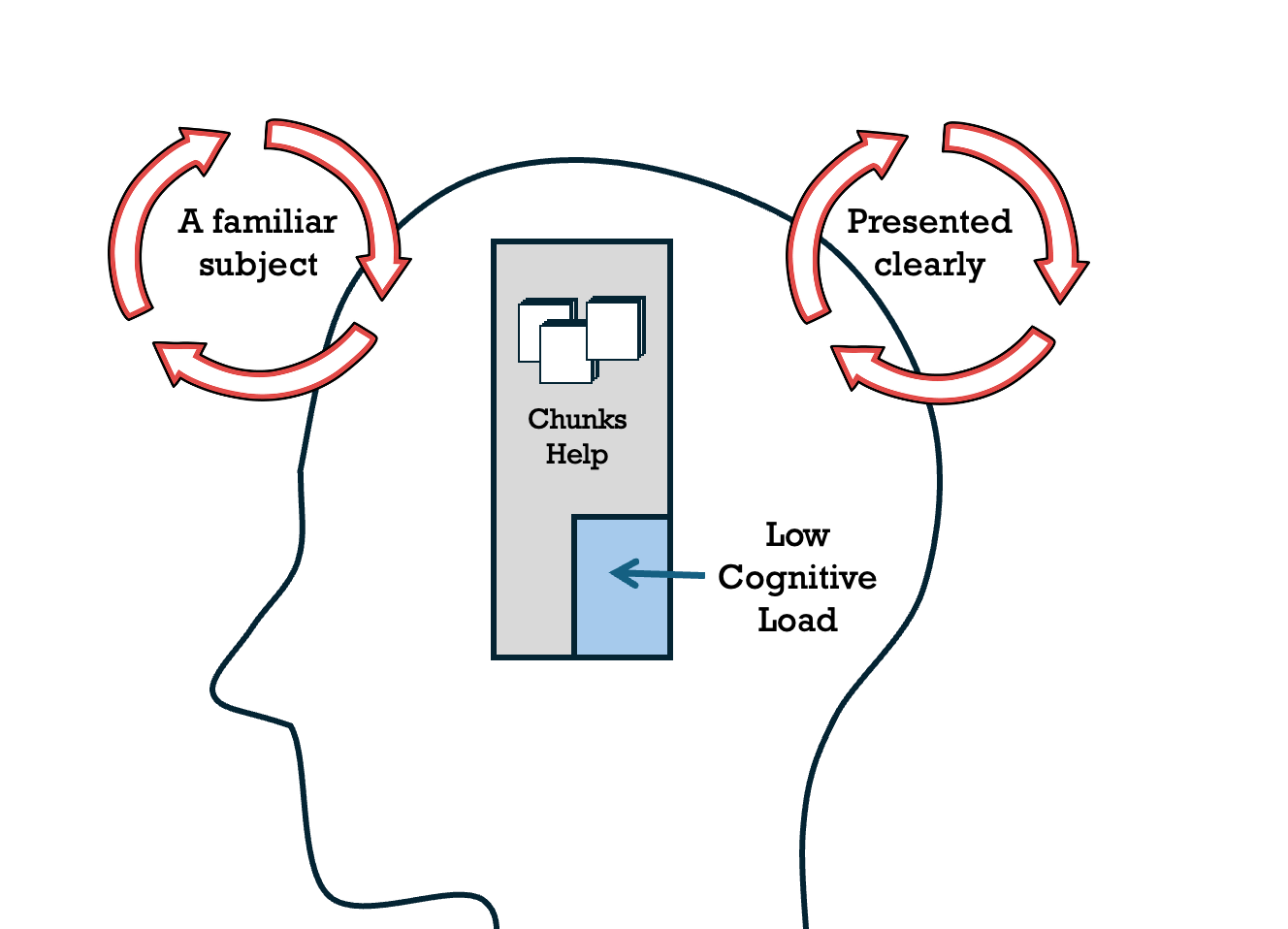
This subject is pretty complicated. Let’s see if I can decrease the cognitive load with visuals.
Low Cognitive Load
When information feels familiar and is clearly presented, cognitive load is reduced, which frees up resources for processing and forming new chunks.
High Cognitive Load
When information feels complex and is difficult to read, cognitive load is high. There aren’t enough resources to form new chunks.
Bring It All Together
When learning something new, our minds use working memory to process the information. We can hold about four chunks at once, and the system is subject to overload and predictable mistakes. Cognitive load is the pressure placed on working memory. That pressure can grow or shrink depending on two factors:
Intrinsic load: Complexity is all around us. This “load” represents how much processing is required to grasp the complexity of a subject, relative to the learner’s existing knowledge. Quantum physics has a high cognitive load for the layman; basic addition has a low cognitive load for most people.
Extraneous load: Presentation matters. This load relates to how much processing is required to grasp how the information is presented. When a diagram is poorly designed, or sentences have too much jargon, load increases.
The lesson: Manage the complexity of the subject you're communicating and make the presentation easier to consume.
But another mechanism plays a powerful role. The chunks connection:
When we know a subject, our existing chunks help reduce cognitive load by using compressed versions of ideas instead of details. This frees up resources.
When we encounter complexity, it uses up our cognitive resources so we aren’t able to form new chunks.
Why Cognitive Load Matters
First, cognitive load isn’t just a handy metaphor. Decades of research have explored the limits of working memory and how it affects learning. We’ll look at that research soon.
For now, cognitive load gives us a practical way to think about clear communication and turns explanation into two jobs:
Start by considering what your audience already knows. Their existing chunks determine how much complexity they can handle.
Remove unnecessary load. Strip out anything that makes the audience work without helping them understand.
Good explanations can’t eliminate the complexity in every subject. But they can ensure that the audience’s limited capacity is used on the overall subject and not deciphering complex language, bad diagrams, and poor presentation.
Next, we’ll take a look at the science behind these ideas.
Do you write on Substack?
Recommendations are a helpful way to share the publications you enjoy. Please consider recommending The Science of Explanation.
Otherwise…
Please consider hitting the ♡ button below (it helps others find this post)
I’d love to hear from you. Leave a comment, and we can chat.
Know someone who would enjoy this? This post is public, so feel free to share.