


Think for a moment about everything you understand about the world around you. It’s a huge number of interconnected ideas.
Your understanding of your bed may relate to sleep, sex, laundry, and reading.
Your understanding of physics may relate to curiosity, academics, math, and work.
Your understanding of democracy may relate to politics, laws, freedom, and history.
How we understand the world around us is highly dependent on what we’ve experienced and learned over a lifetime. It’s our personal context.
As we’ve seen in previous posts, information that arrives to us isn’t filed away like a card catalog. What we know is not merely a collection of facts that we can summon when needed.
We interpret new information using what we already know. Our existing knowledge and experience help shape what we notice, how we understand it, and what we remember.
That’s what I mean by “constructed by us.” The things we learn and remember are a combination of the new information and our existing knowledge, including context.
A Classic Example
In 1977, Roger Schank and Robert Abelson published a book called Scripts, Plans, Goals, and Understanding. In the book, they provided a clear example of how patterns guide our understanding. It’s called The Restaurant Script.
When you enter a restaurant, you don’t have to start from scratch. You’ve seen the pattern many times:
Enter → get seated → order → eat → pay → leave
The steps are simple and easy to take for granted. But within that pattern, there are roles and expectations. You understand that ordering food leads to the server delivering it. When you’re done, you expect the check.
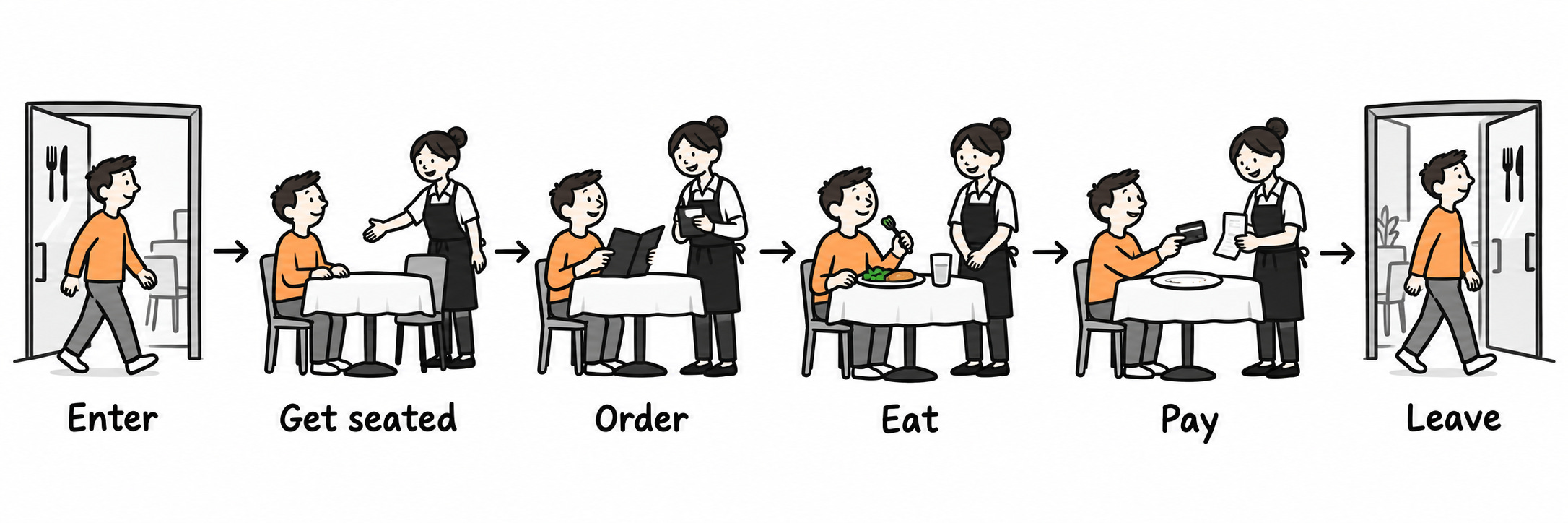
Often, reality matches our expectations and things flow smoothly. The pattern is reinforced. Other times, we see something new and may revise our expectations.
These patterns are one way how the mind organizes information. They build up over our lives and are interconnected with other patterns. They sometimes get updated, fade to the background, or are combined.
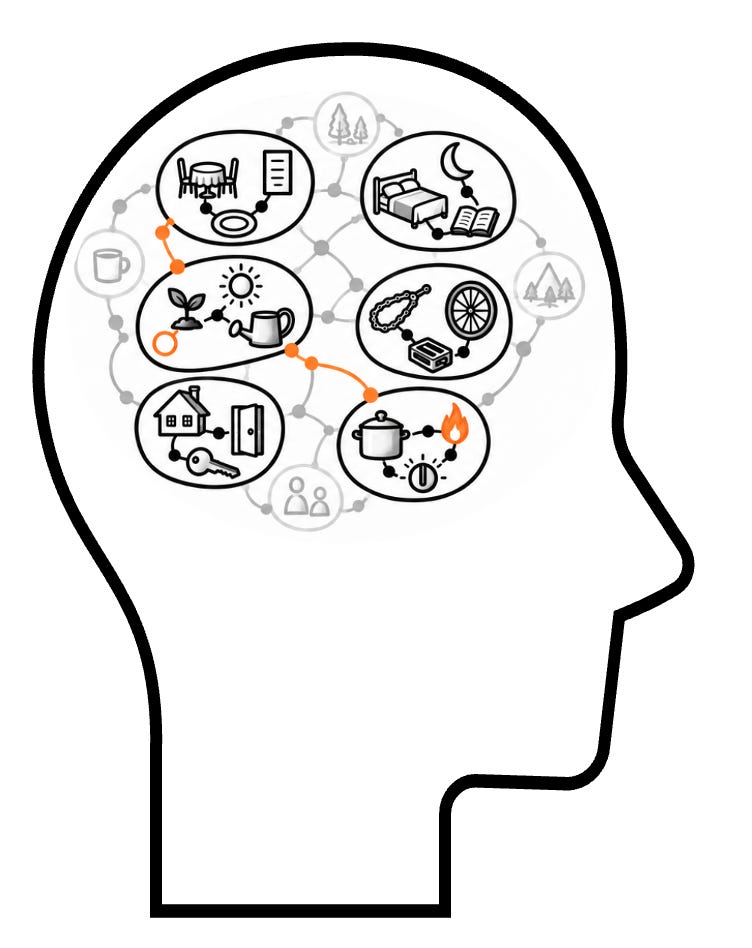
Our restaurant pattern informs what we do at a coffee shop or bar. Researchers often refer to these patterns as “schemas.”
A “schema” is organized knowledge about a familiar kind of object, event, or situation, including relationships and expectations. A script, like the restaurant example, concerns how a familiar sequence of events usually unfolds.
Schemas prevent us from having to understand every situation from scratch.
Note: I’m using the term “pattern” as a shortcut for these schemas, scripts, etc.
When Patterns Break
Part of learning and building knowledge is updating our patterns. We often experience situations where we have expectations that don’t match reality.
Let’s consider the restaurant example again. The pattern is familiar:
Enter → Sit down → order → food arrives → eat → pay → leave
Now let’s imagine going to a cafeteria for the first time.
You enter the restaurant with expectations and see that something is different. Instead of a host, you see a line of people, trays, a food counter, and a checkout.
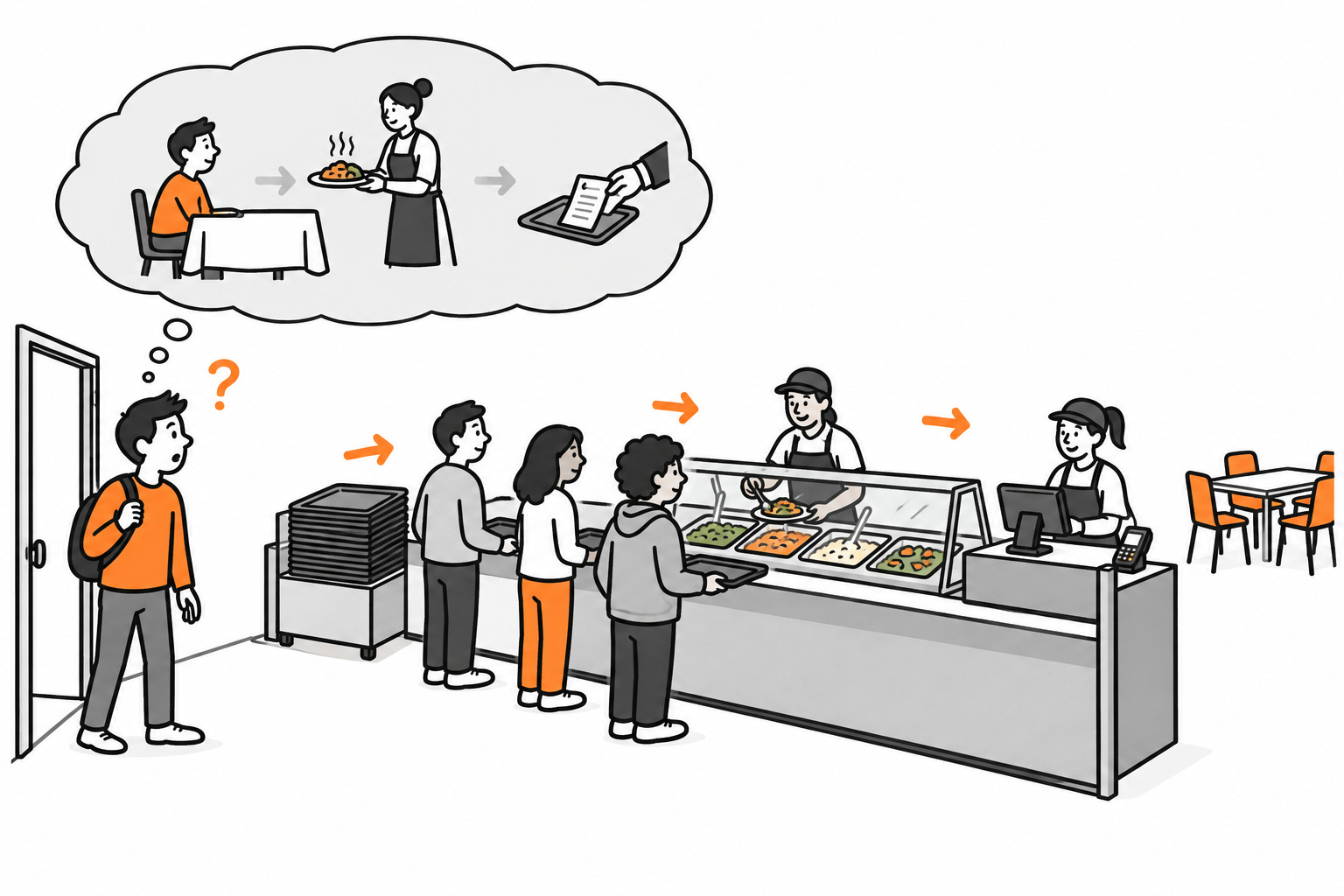
You don’t have to start from scratch to understand this new context. Your restaurant pattern gives you a starting point for adaptation. You know what to expect at a restaurant (pay, eat, leave), but still need to figure out how to do it.
In this way, patterns give us a head start in adjusting to a new situation. When things change, or we learn something new, our patterns can update to include new situations and connections.
In this case, your next cafeteria visit may feel more normal.
How Patterns Become a Problem
Our expectations are powerful. When new information arrives, we recognize the similarity and may assume the connection is stronger than it is. We try to connect it with an existing pattern because that’s more efficient.
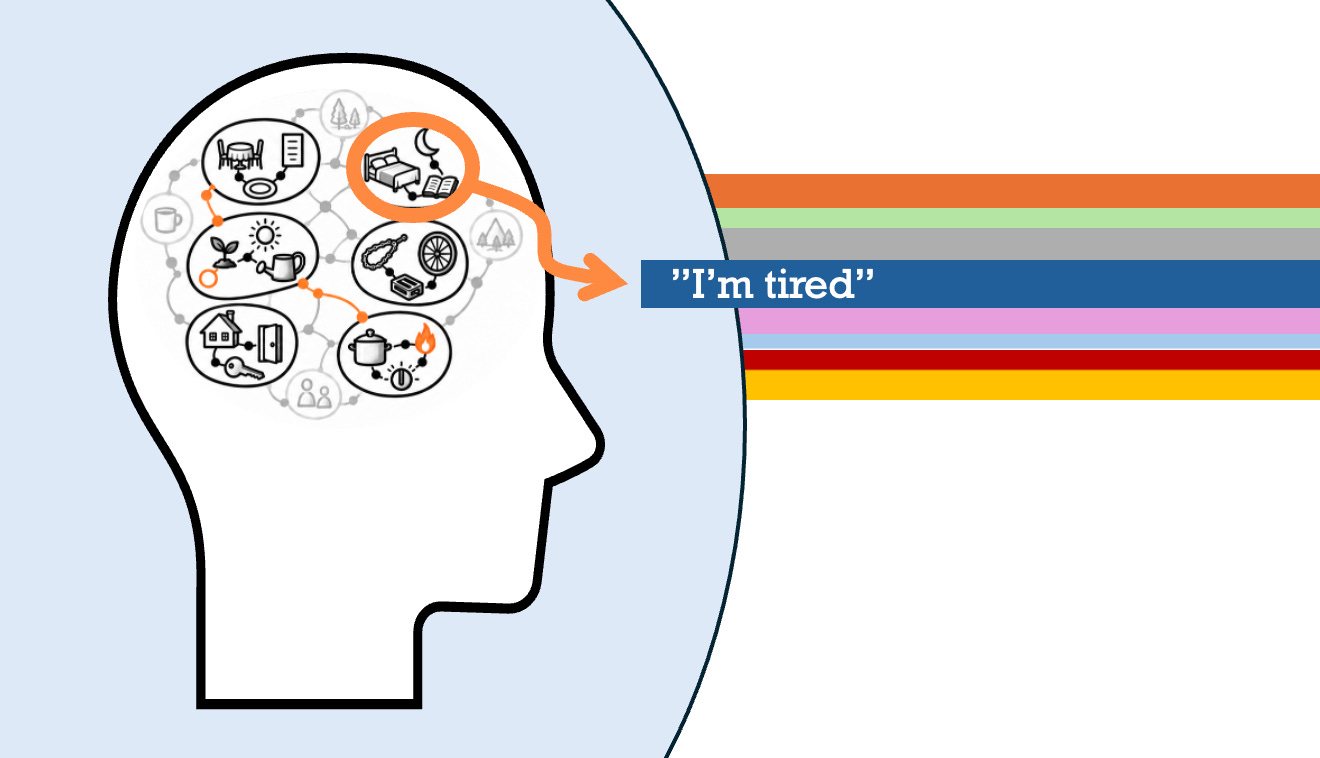
A key idea to remember: the mind is constantly trying to fit new information into what we already know.
Sometimes, this creates a problem. We easily see connections that aren’t there. We assume we understand the new information because we can see it through the pattern we already have.
An Example Misunderstanding
We’ll assume you are used to working with gas burners on a stove, and the pattern is clear:
Turn up the dial → more gas flows → more heat is produced → pan heats faster
A dial set to “high” heats the pan faster than one set to “low”.
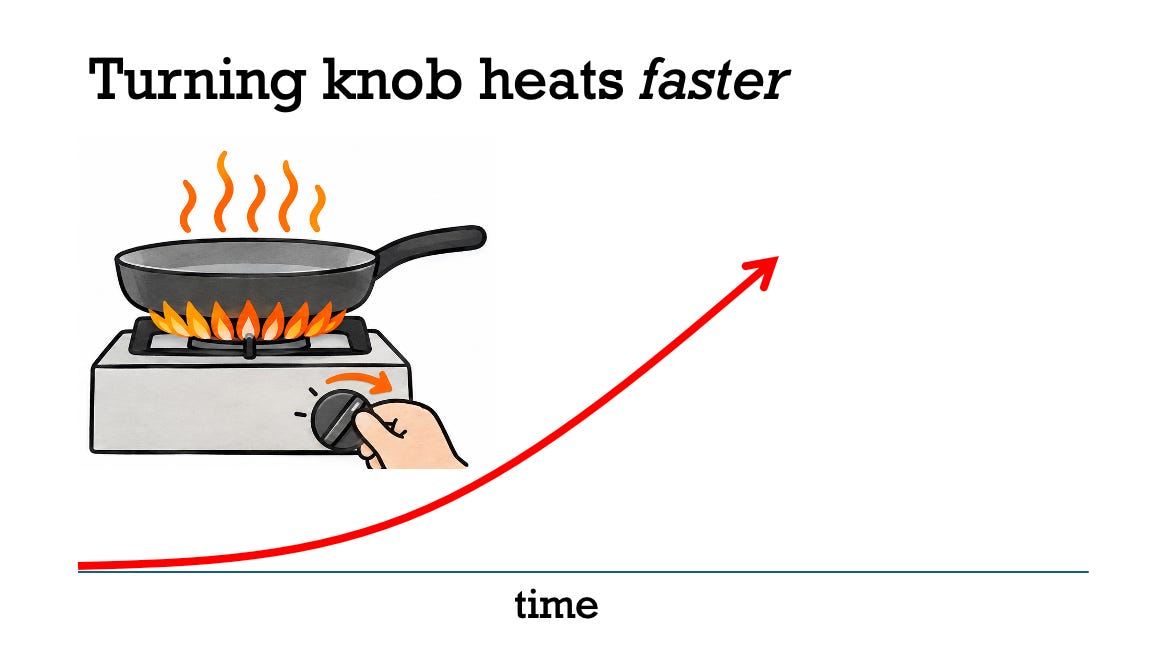
This creates an expectation that involves energy and temperature: heat arrives quicker via a higher setting.
Now imagine experiencing a thermostat for the first time. You want the room to warm quickly and see a familiar-looking dial. So the pattern kicks in: you expect a similar outcome: a higher setting leads to faster heating.
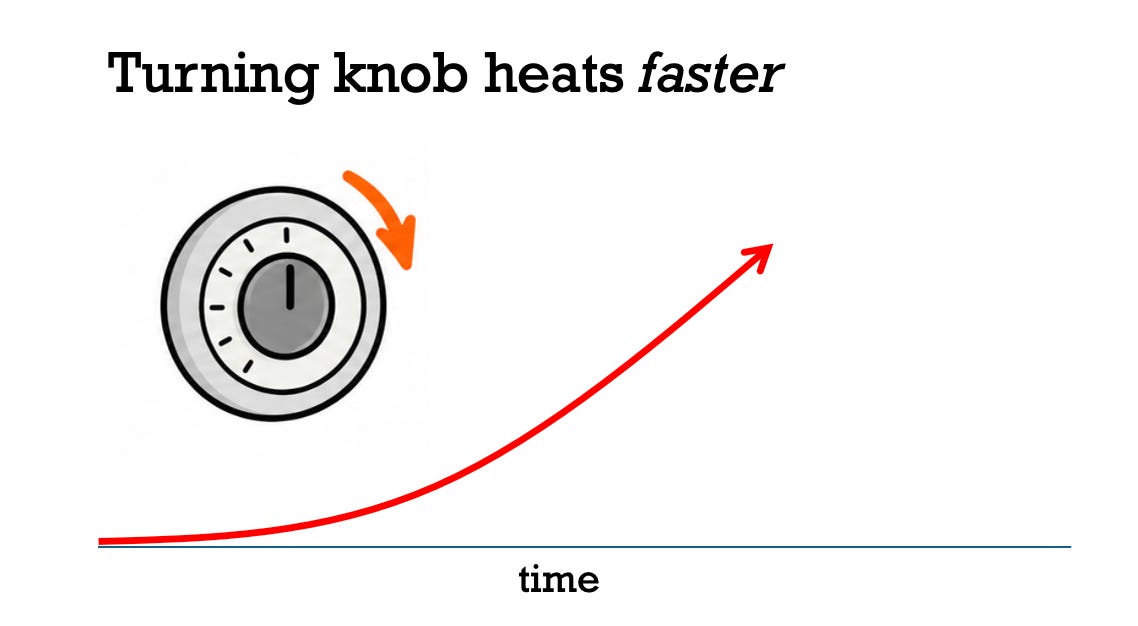
So you turn the thermostat to the maximum setting, expecting it to heat faster. The context and your existing knowledge provided a plausible explanation that felt correct to you. It fit into an existing pattern.
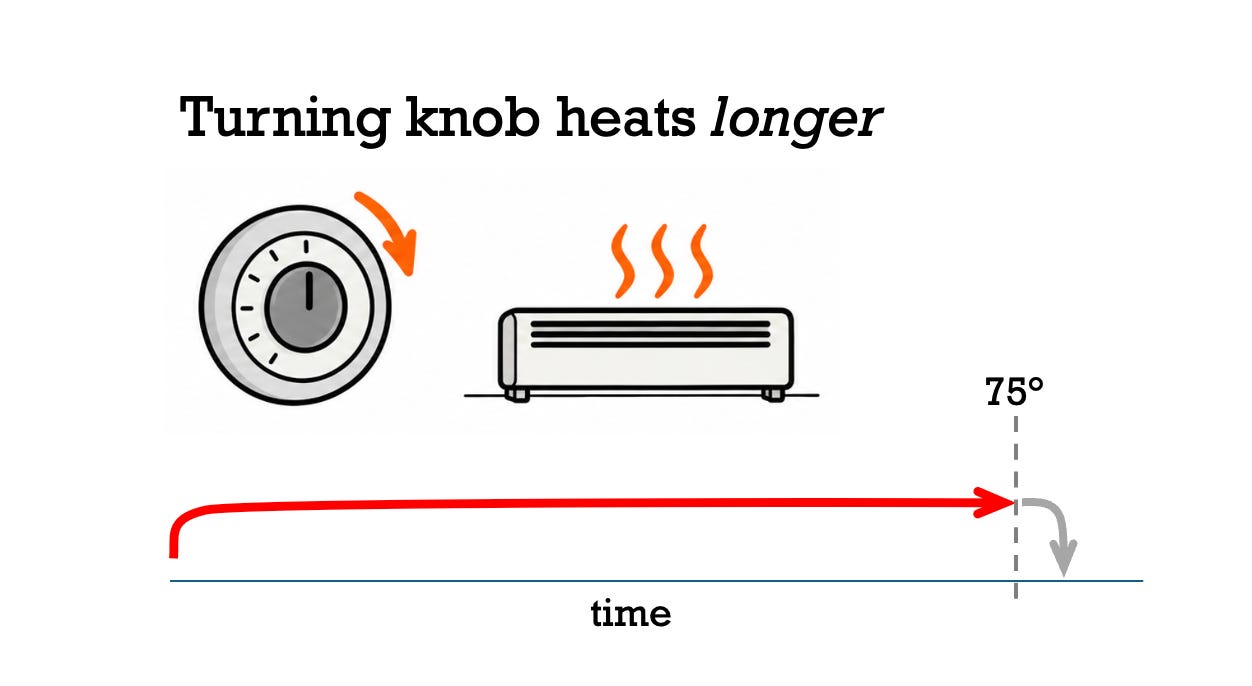
Here, the familiar pattern led to a mistaken expectation. In a basic on/off heating system, the thermostat sets the target temperature, not the heat output. Choosing 90 instead of 75 won’t make it reach 75 any faster. It will keep the heating on longer.
What Happened?
Your existing pattern led you astray. The situation, context, and mechanism looked similar. You had a similar experience in the past. Yet, you were wrong. The problem was not the reality of thermostats, but expectations you brought to the table.
This is a common way that we misunderstand. We’re biased to see a new idea through the lens of an existing pattern.
This is a big challenge for communicators. Everyone has patterns and expectations that are invisible. Part of clear communication is anticipating the audience’s assumptions (dials lead to faster heating) and finding ways to update their patterns.
This relates to the Curse of Knowledge. Often, our patterns feel so obvious and normal that we are drawn to leaving them out. We assume everyone sees the same patterns. Do I really need to explain it?
What Can Help?
Do a bit of mental homework before you speak. Imagine the audience having patterns that they will use to understand your message. Ask yourself:
What patterns are they likely to have?
How will my ideas confirm or challenge those patterns?
What can I do to help them update their existing patterns?
Your audience doesn’t simply receive your message. They interpret it using their own experience and expectations. You can’t fully predict that interpretation, but you can make the important relationships explicit and give people opportunities to check their understanding.
How?
Don’t assume you share the same patterns. Build context. Make connections visible. Show causal relationships. Discuss the mechanism of the dial and the difference between heating faster versus longer. This can help them construct a new pattern, or update an existing one.
Coming Soon
In the background, something essential is also playing a role: our ability to reason. The idea of reason is bigger and more pivotal than it seems. We’ll dive into it soon.
If You Enjoyed This Post
Please consider hitting the ♡ button below (it helps others find this post)
I’d love to hear from you. Leave a comment, and we can chat.
Know someone who would enjoy this? This post is public, so feel free to share.