


In this series, we’re tracing the path an idea takes when it enters the mind. Today’s post is about the idea that information, like a news headline or conversation, isn’t stored in the mind as-is. Instead, our minds apply context and look for meaning before storing it.
Of Course Context Matters
It seems obvious to say that context matters. We use it to make sense of everyday life. It’s the glue that connects what we know to what we’re experiencing.
For years, I’ve taught communicators to appreciate and use context to improve explanations. But something was always missing. My view of context was based on an assumption that it works. I had no scientific evidence to back up my claims.
Today, I have a new perspective. The power of context has been studied for many years. Not only is it real and necessary for comprehension, but understanding the science behind it can lead to better explanations.
Here’s the story behind how we know…
Bransford and Johnson
John Bransford and Marcia Johnson were at the forefront of the movement away from behaviorism and toward cognitive science. Their focus: memory and comprehension.
Their work together led to one of the foundational studies in cognitive science, and one of the most cited papers in the field, called Contextual Prerequisites for Understanding. Bransford was a lead editor of How People Learn, a landmark report published by the National Academy of Sciences, now considered a classic in education research.
The Big Picture
At the time, researchers were oriented around the idea that information moves between people like a transmission from a radio tower. The signal carries all the information needed for understanding. From this perspective, we are passive receivers of signals that arrive fully formed and are stored in memory.
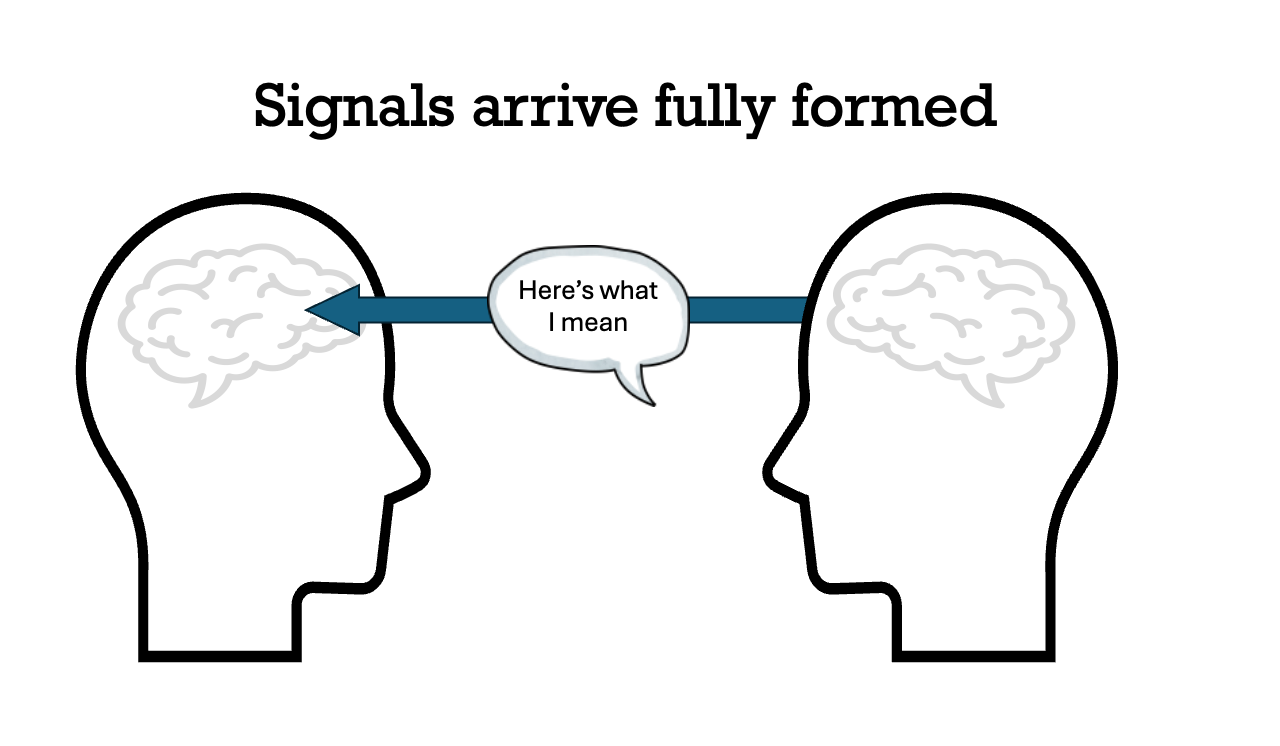
What if, Bransford and Johnson asked, the signals are not complete, but more like raw data that has to be translated by us?
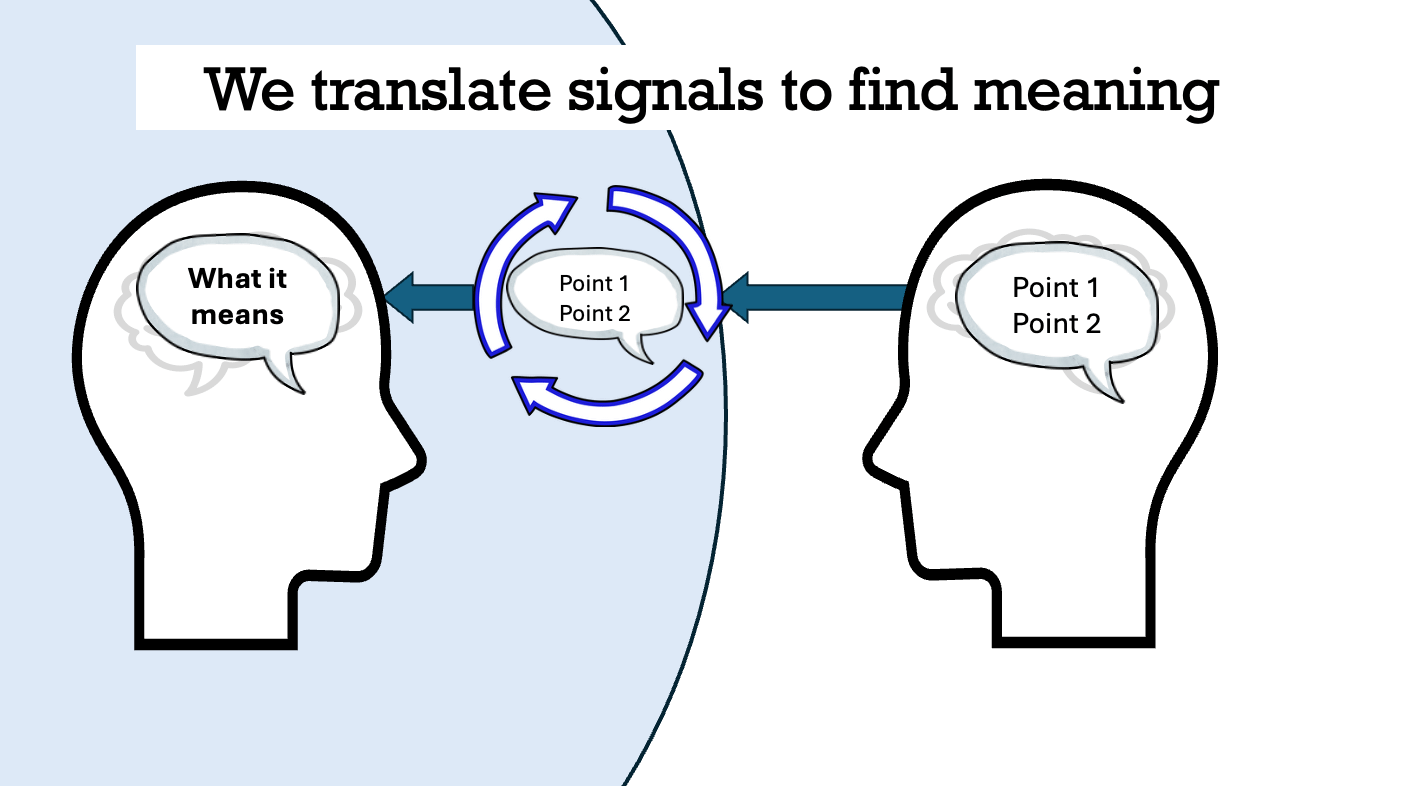
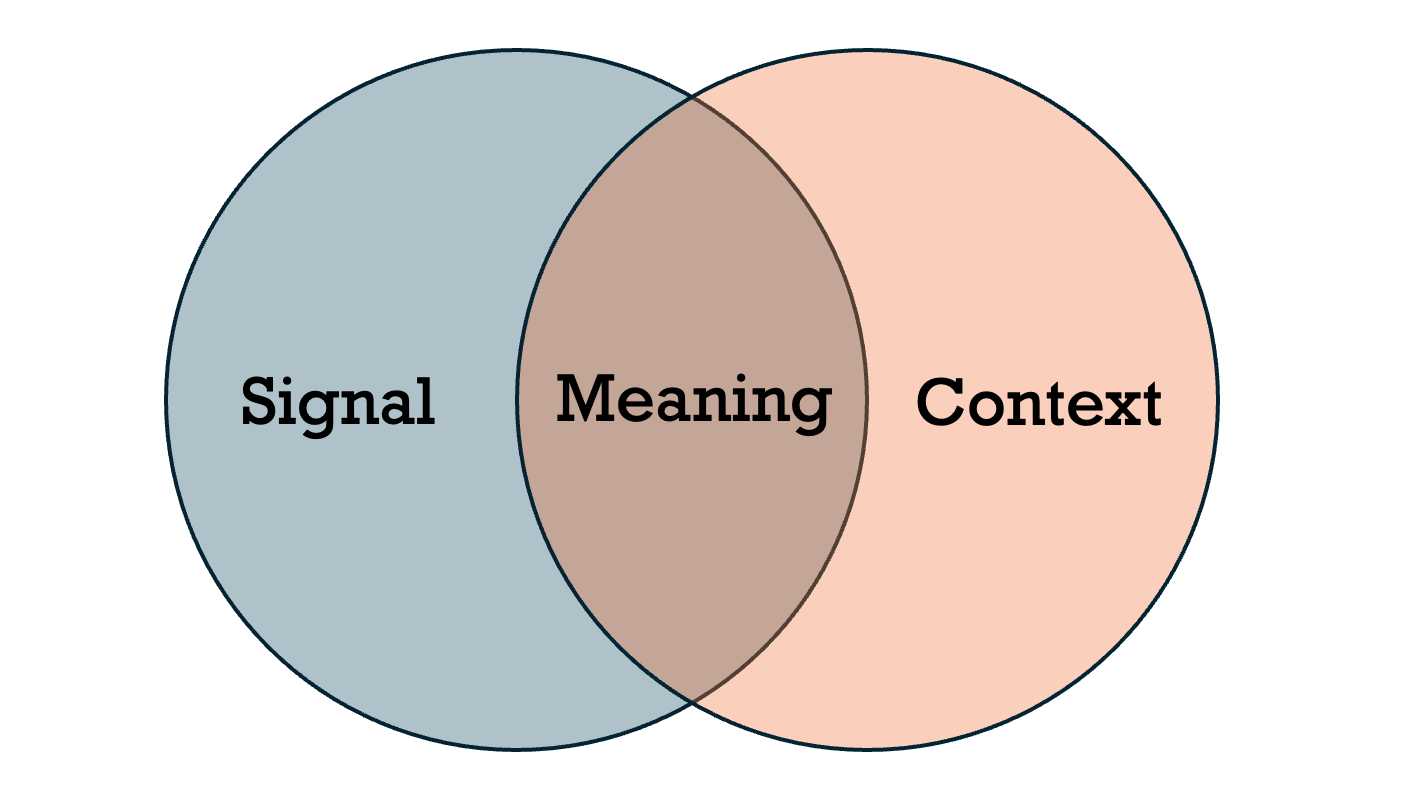
From this perspective, we play an essential role in turning the signals into something meaningful. How do we do that? With context.
Signal + Context = Meaning
This idea birthed a powerful new idea in cognitive science: our minds play an active role in translating signals into meaningful information. This is called constructivism: we actively build understanding by connecting new experiences to what we already know.
The challenge of explanation relates directly to this idea. An audience is made up of people with different contexts. How do we account for these differences?
The Studies
Bransford and Johnson designed a simple study to understand how context affects comprehension and memory.
Here’s how it worked:
Study subjects were divided into five groups that all heard the same recorded message. I’ve abbreviated a version of the original below. Read it carefully:
The procedure is actually quite simple. First you arrange things into different groups. Of course, one pile may be sufficient depending on how much there is to do. If you have to go somewhere else due to lack of facilities that is the next step, otherwise you are pretty well set. It is important not to overdo things.
As you can tell, the words are easy to read, but have no apparent meaning. What’s missing is context. Once it is provided, do the subjects remember more from the passage?
The Context
The required context can be summed up in two words: doing laundry. Bransford and Johnson provided this context to the five groups in different ways:
Group 1: Heard the description once with no context
Group 2: Heard the description twice with no context
Group 3: Provided context (doing laundry), then heard the description
Group 4: Heard the description, then provided context (doing laundry)
Group 5: Provided an image of the objects in the description before hearing the description
5 Groups, 1 Winner
After the experiment, each group was asked to recall the 14 specific items in the description. The scoring was based on which group could recall the most items, and the winner was clear.
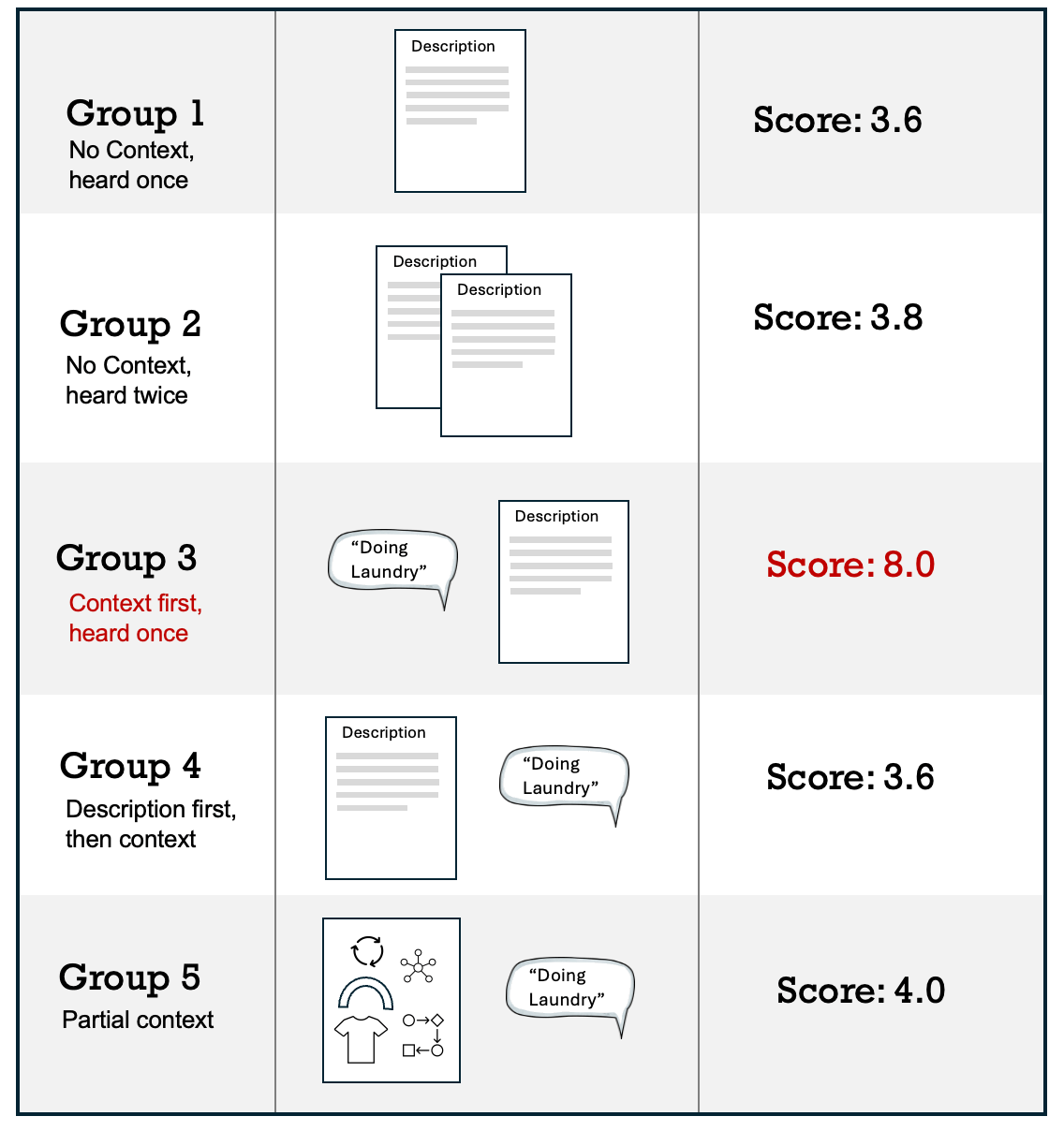
Group 3, who were provided context first, could remember about twice as many items as any other group. Over and over, Bransford and Johnson showed the power of context. When it is provided first, it helps people remember and comprehend what they heard.
Why Does This Matter?
This study has direct connections to better explanations because it shifted the thinking from “meaning is transmitted” to “meaning is constructed.” As explainers, we don’t transmit information. Rather, we provide what is needed for the audience to construct meaning.
The problem is that context is not always obvious or available. It often has to be supplied by the communicator, and therein lies the skill of the explainer. The best explanations account for the audience and use context as a tool for developing knowledge.
Three Lessons for Explainers
Imagine a presenter on stage, explaining a new idea. Your ability to understand and remember what they say depends on different kinds of context.
Context comes from two places. The first is the “communicated” context. This is information provided by the explainer that’s meant to help with understanding. The second is your “personal” context, based on your existing knowledge and experience.
The context types work together. Part of the presenter’s job is to communicate context: “This matters because…” and recognize that you’ll apply your personal context to the information. Understanding forms more easily when both are present.
Sequence matters. The experiment above showed that context only helped when it was provided first, before hearing the description. The presenter can increase their chances of being understood by communicating context first, and giving you an opportunity to identify if it’s meaningful.
Looking ahead…
For a while now, we’ve been focused on the very beginning of the Gauntlet of the mind, when information arrives. Soon, we’ll dive a bit deeper and look at how the mind processes information it finds meaningful.
*All visuals by Lee LeFever
If You Enjoyed This Post
Please consider hitting the ♡ button below (it helps others find this post)
I’d love to hear from you. Leave a comment, and we can chat.
Know someone who would enjoy this? This post is public, so feel free to share.
Very interesting. This relatively simple process explains so much of the issues with communications. Context of laundry might make the message clear but when the context is presented as AI, capitalism or socialism the meaning is created from the perceived context which might be widely divergent from the meaning of the sender. Much of the conversation then goes past each other.