


Throughout this series, I’ve returned to a storyline that is meant to make the research more relevant to everyday life. We’ve followed the story of Olivia at the doctor’s office, where a conversation with her doctor serves to highlight why some ideas survive the gauntlet of the mind, and others don’t.
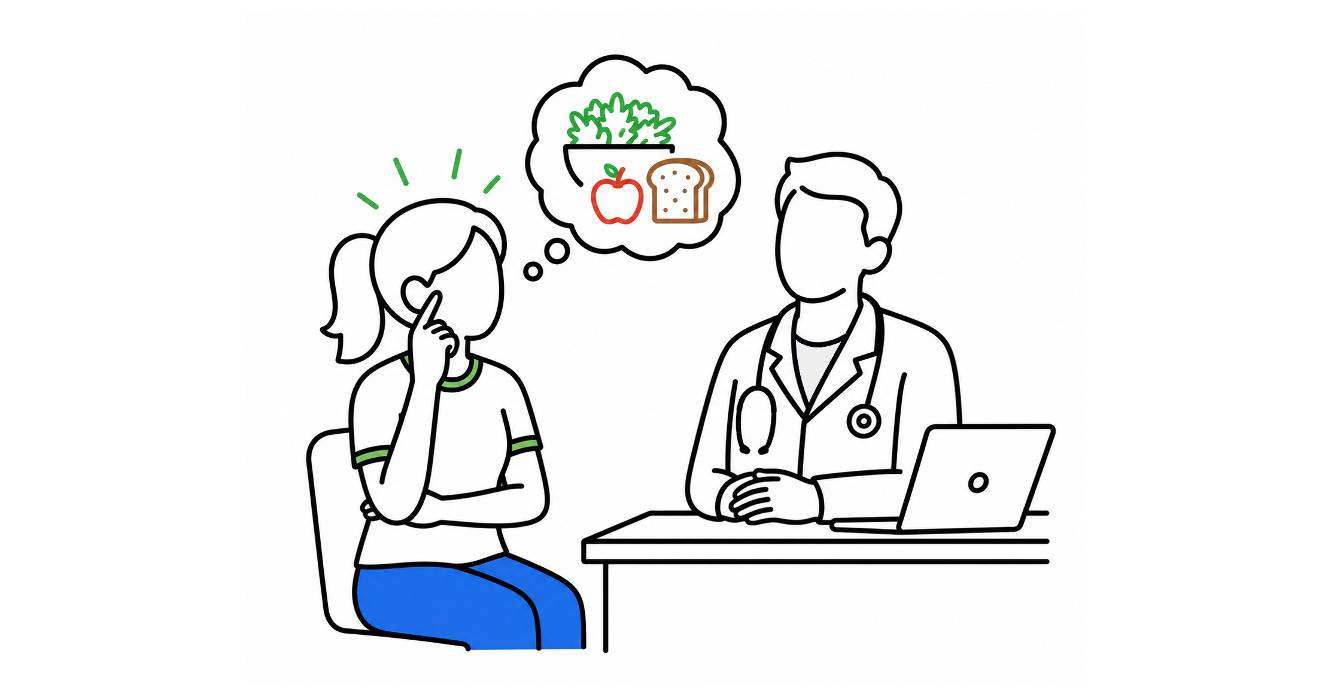
In this story, we know the conclusion. The doctor’s advice to eat more fiber made it into her long-term memory and became a part of her lifestyle.
The question is: why did this specific piece of advice survive when so many other things were forgotten?
The Setup
Before going into the doctor’s office, Olivia wasn’t thinking about cholesterol, heart disease, or healthy eating.
The results from her blood test changed the context.
In milliseconds, her attention focused on the doctor, whose words seemed to matter more than they did before. Her family history, her existing knowledge, and the situation all added meaning. She saw the gist quickly: this is a threat to my health.
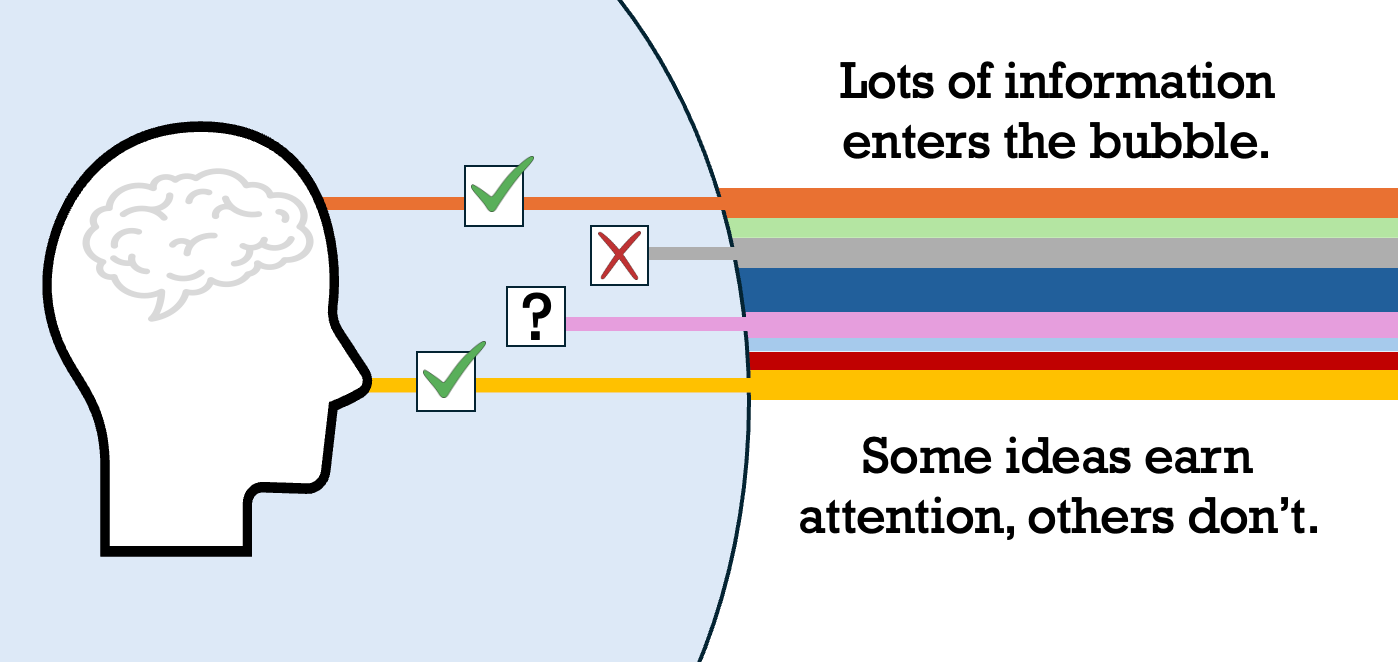
Most of this happened automatically and with little effort. Her mind was operating in what Daniel Kahneman called System 1: fast, error-prone, and constantly scanning.
In the moment, it felt like all the doctor’s advice was being remembered, but it wasn’t. Most of what she heard was being forgotten because the human mind has hard limits. Most of what enters our awareness never becomes a lasting memory.
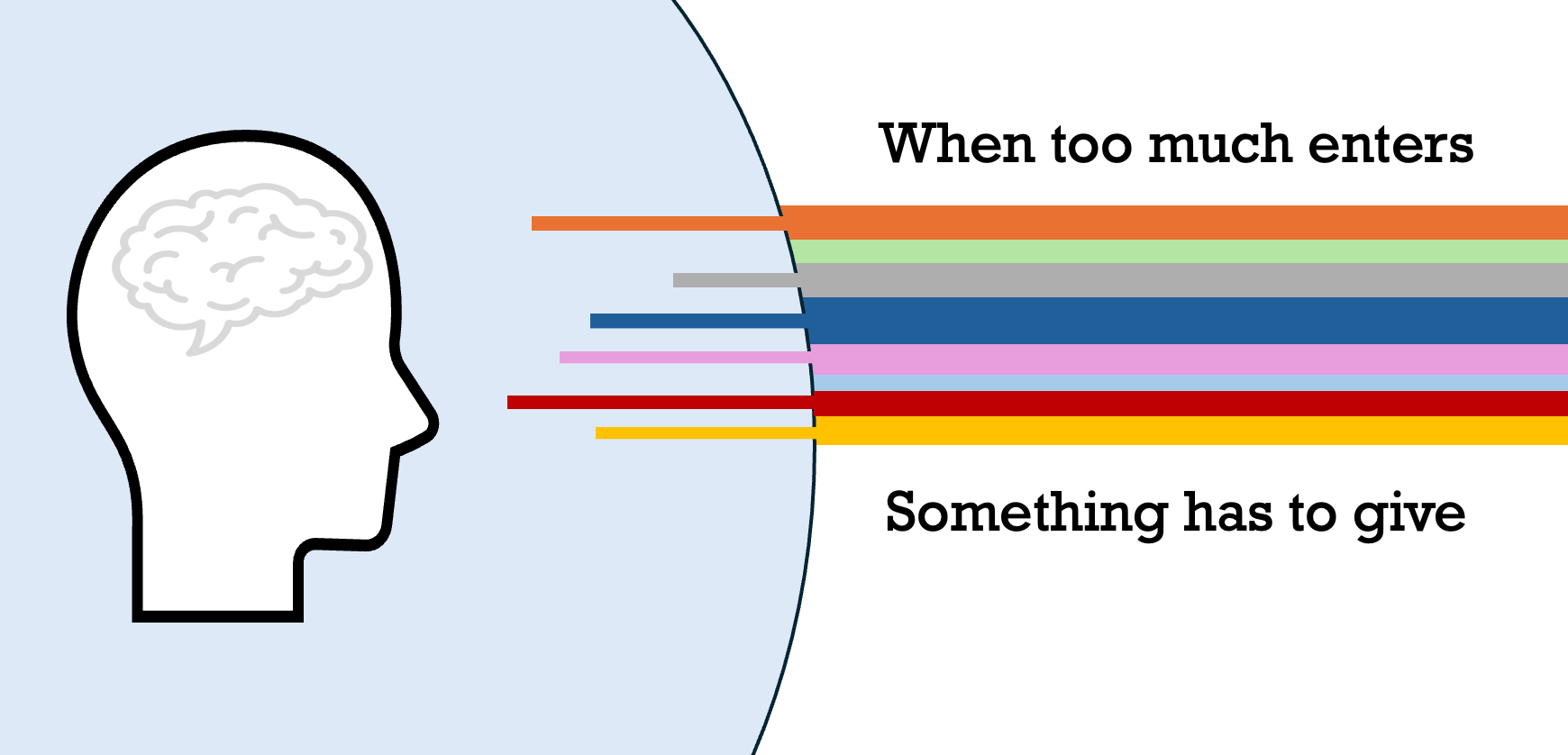
Working Memory, Context, and Chunks
As the doctor recommended losing weight, consuming less salt, using the treadmill, eating smaller portions, eating more fiber, etc., her mind was also on the clock and the crying baby next door.
Her working memory was under pressure and her pupils dilated.
Like most people, she can only hold and manipulate roughly four “chunks” of information in working memory. In order for “eat more fiber” to be remembered, it had to compete for working memory resources.
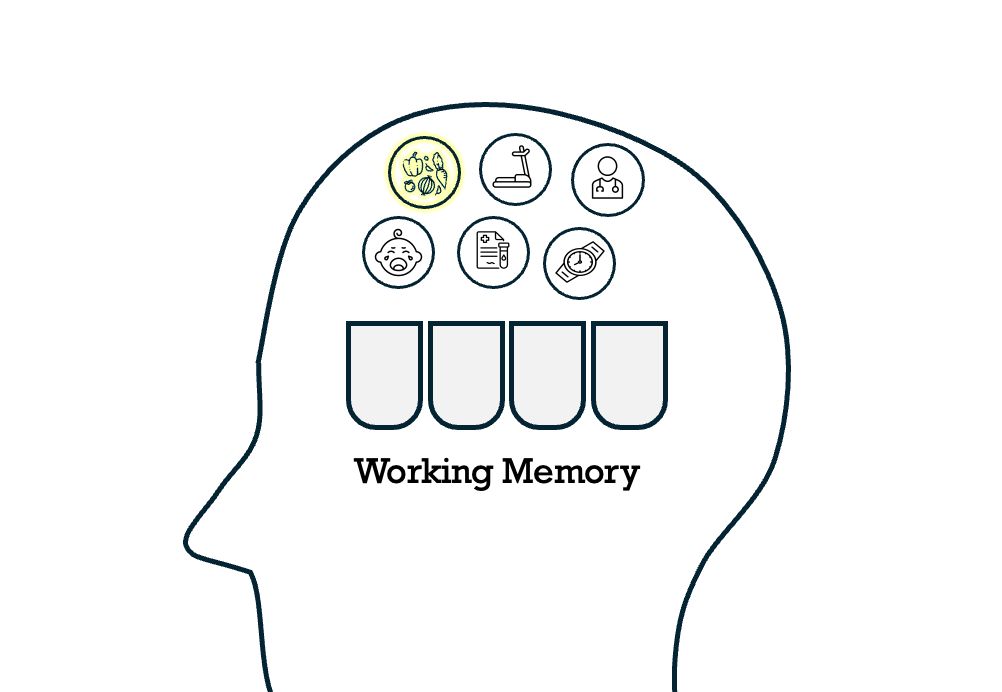
But “eat more fiber” had an advantage.
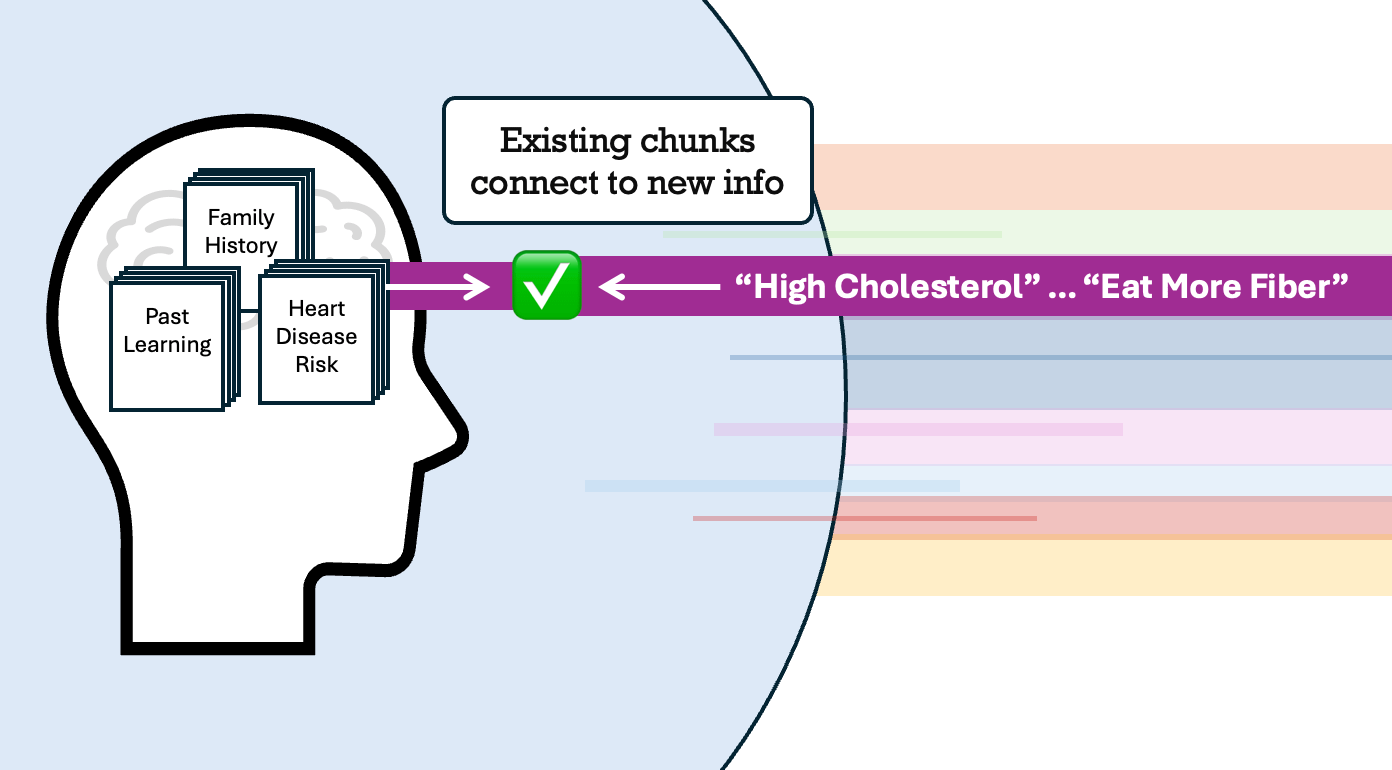
From the moment Olivia heard her cholesterol numbers, they connected with information she already had: her family history of heart disease, what she had learned about cholesterol, and the health problems of family members.
The treadmill or smaller portions didn’t have this history.
Taken individually, the details of heart disease are complicated, but she didn’t have to construct them from scratch. Instead, years of experience meant the idea existed as a larger concept in her mind: the risk of heart disease.
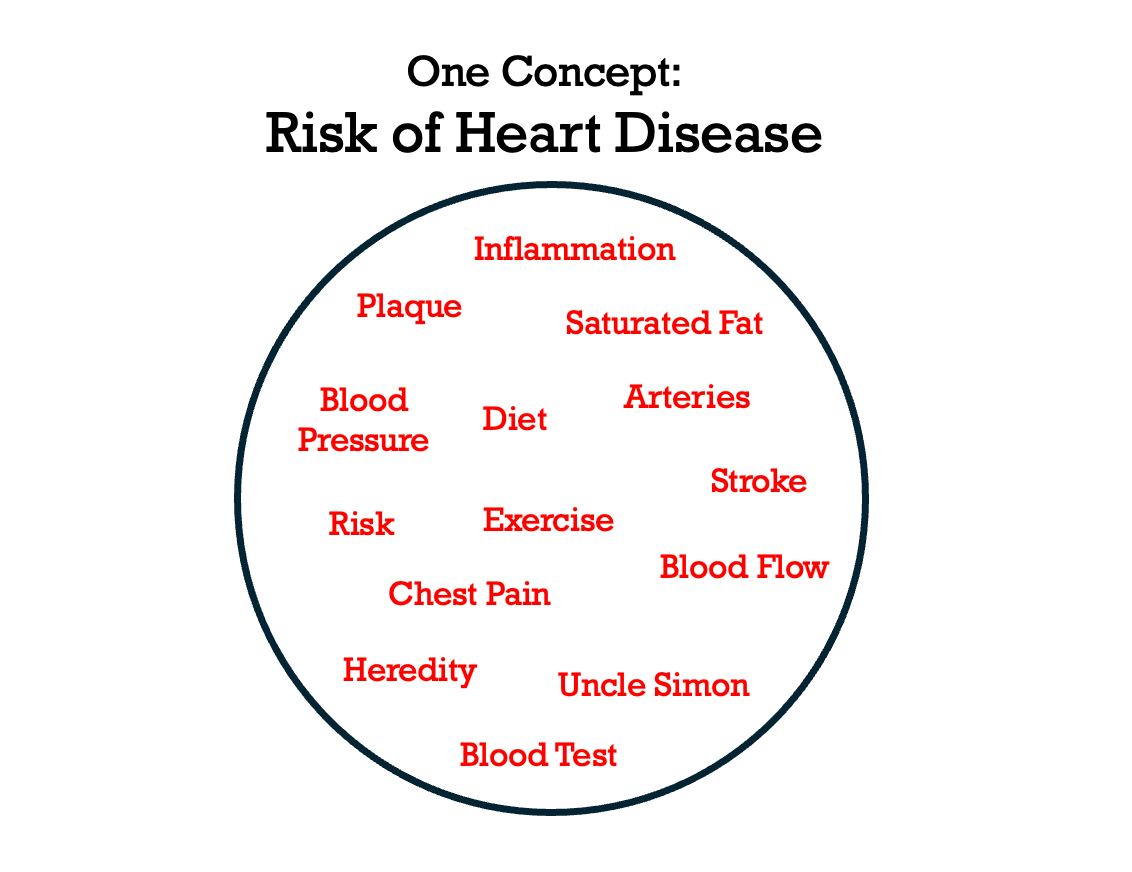
If someone with no knowledge of heart disease heard the exact same information about cholesterol, their mind would have seen a lot of details instead of a concept.

The chunks they need to understand the big picture had not yet formed. Their mind and working memory would be overwhelmed, making everything harder to remember.
Advice with Good Explanations
At the same time, her doctor could have used technical jargon and data to explain the specifics of heart disease. Instead, he used clear language and familiar examples.
The information was still complex, but the doctor’s explanation reduced the extraneous cognitive load. By lowering the cognitive load, Olivia could focus on the meaning instead of decoding technical language.
A Productive Combination
The incoming advice to eat more fiber was met with Olivia’s existing knowledge and experience to create a potent combination.
The cholesterol numbers meant something to her because context and existing chunks were already in place. When new information connects to existing chunks, the mind can process and organize more efficiently.
But that’s not all.
On the ride home, she thought through the doctor’s advice and made a plan to stop and buy high-fiber food.
Here she was engaging in a different kind of thinking that is slower and more deliberate. This is what Kahneman called System 2 thinking.
She wasn’t hearing advice in real time, but thinking through it, connecting it to her life, making decisions, and creating a long-term plan.
This type of thinking is powerful because it provides new opportunities for new information to connect to existing knowledge and become established in memory.
The Survivor
Up to now, “eat more fiber” survived because a combination of factors worked together.
It captured attention.
It connected with meaningful context.
It fit into knowledge Olivia already possessed.
It was presented with reduced cognitive load.
And later, Olivia actively thought about it and used it to make a decision.
Other pieces of advice, such as using the treadmill or reducing salt, had fewer of these advantages. They were easier to lose.
What survives the gauntlet tends to be what the mind finds meaningful and has the capacity to keep.
A Challenge for You
The next time you need to explain a complicated subject to a person or audience, think about the bullets above as a guide that’s not simply advice or intuition, but a picture of how the mind processes information.
If You Enjoyed This Post
Please consider hitting the ♡ button below (it helps others find this post)
I’d love to hear from you. Leave a comment, and we can chat.
Know someone who would enjoy this? This post is public, so feel free to share.