


Let’s return to a familiar scenario: the feeling of walking into a party.
Previously, we discussed it in terms of attention, what earns it, and why. But there is an even faster, more automatic part of this scene: you quickly get the “gist” of what’s happening. You automatically sense what’s there before you think about it or what words describe it.
The same is true when you view a work of art, notice someone’s emotions, or hear a sound. You very quickly form an idea or concept. You get the gist, and it’s an essential part of how new information makes it into your memory.
Gist processing feels obvious, but has real scientific weight. For example, we know it takes about 100 milliseconds for us to get the gist of a scene. That’s a blink of the eye.
How do we know?
Mary Potter was born in Lebanon and spent her entire career, over 50 years, at MIT, studying cognitive psychology. She studied under Jerome Bruner, who was influential in developing the idea of constructivism and how we make meaning.
She wanted to know: when does meaning start to form? Her work showed that it happens faster than anyone thought possible.
Imagine this simple scenario:
You are shown a drawing of a chair. What’s happening in your mind at the moment it appears? It’s easy to assume that we think in words and that the word “chair” must be the first thing that comes to mind.
This is not the case.
Potter conducted experiments in 1975 and showed that our minds form a quick understanding of the concept before we can think of the right word. It takes about 600 milliseconds to get the concept and 900 milliseconds to get the name.
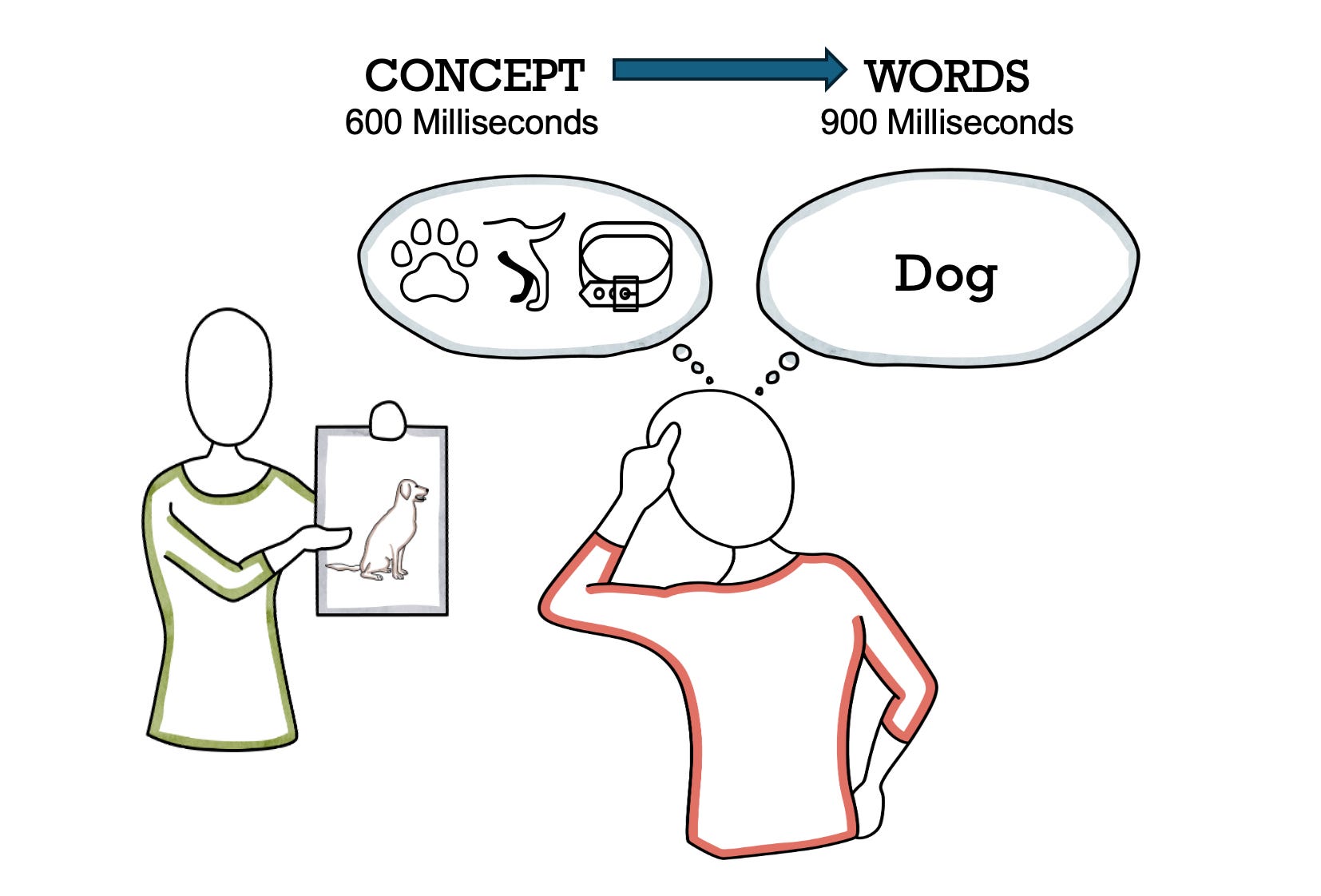
Understanding is upstream of language. We understand first.
Just the gist, ma’am
Potter went on to do more experiments that showed exactly how quickly we can understand and comprehend a concept.
She conducted studies where people viewed a screen where 100s of random images appeared for only fractions of a second. A child playing, two men talking, a car on a road. The images switch so fast that it’s difficult to remember anything. She called this Rapid Serial Visual Presentation (RSVP).
Potter then presents a challenge. She provides a button and says, “There is a picture of a picnic in the images you’ll see. Press the button if you see it.”
Then, she changed the frequency of the images. In some experiments, the images, including the picnic, were displayed more slowly, like every 300 milliseconds. In others, they were switched in 100 milliseconds.
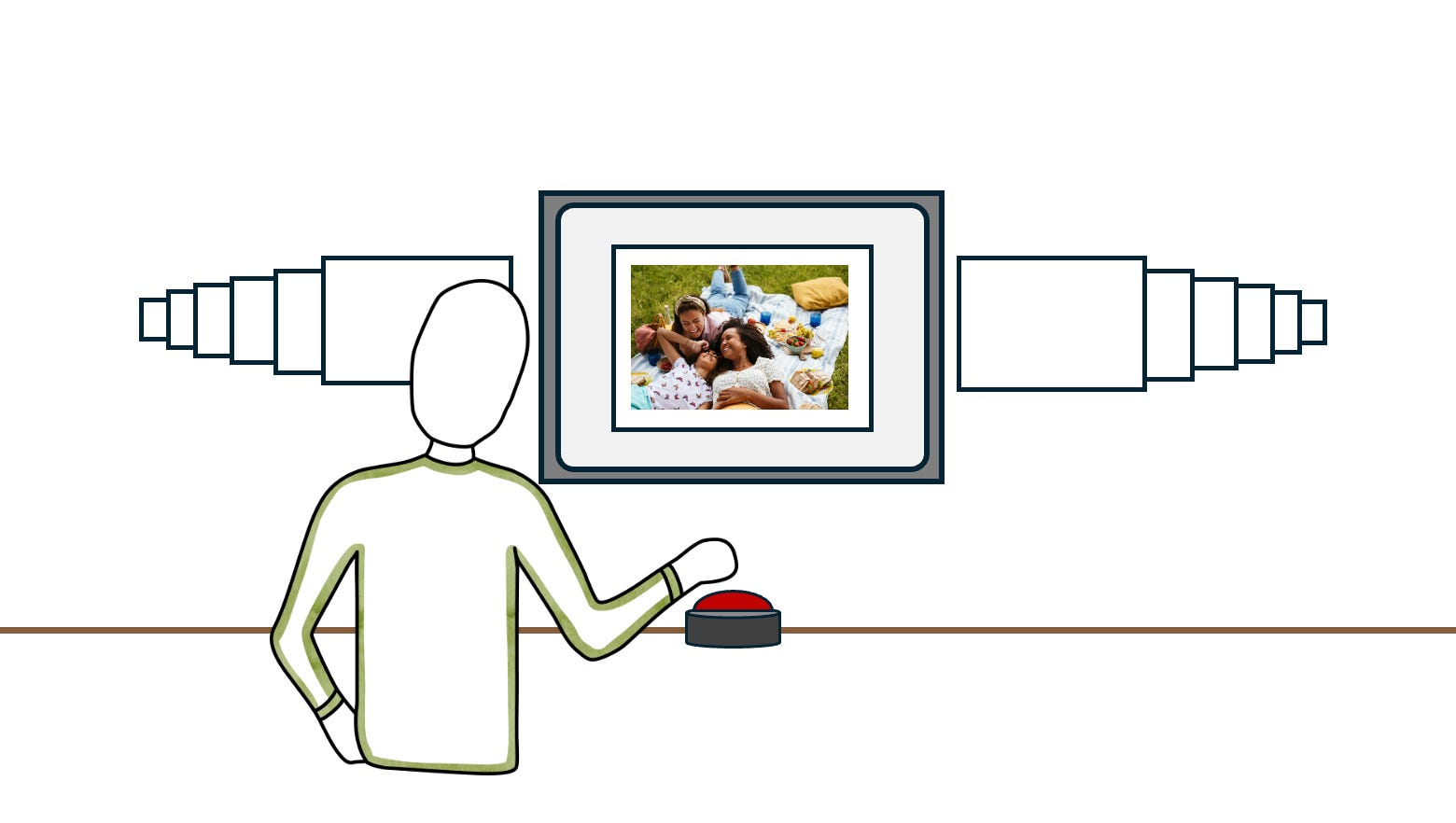
Over multiple experiments, she showed that people could reliably tap the button when the picnic image was on the screen for 100 milliseconds or more. That’s long before the mind considers language or analysis. The gist is there first.
The role of context
We know that context matters and plays an essential role in understanding what we experience. It matters in gist processing, too.
When Potter had subjects view the images with no added instructions, they could remember very little. Why? There was no context.
By providing them with the word “picnic,” Potter provided context that played on their existing knowledge. Like the “doing laundry” example from last week, the initial context set the stage for more attention and better recall.
Context is what holds everything together. The subject’s existing knowledge of “picnic”, “party,” or “chair” provides a foundation for forming a quick understanding of a concept.
Again, we see that context, especially when provided first, makes understanding faster, easier, and more reliable. Without it, the mind has less foundation for understanding.
What this means
We like to think we’re in control. We decide what to look at, how to think about it, and what it means. It feels like we’re making a conscious effort.
It’s an illusion.
Long before we have an opportunity to analyze, consider, or name something, our minds have done a lot of heavy lifting.
Without realizing it, we move our eyes, sense the world around us, and understand concepts before our minds are conscious of what’s happening. It all happens so fast and so automatically that we take it for granted.
It is, for us, reality. But within that reality, the mind is moving with amazing speed.
What we experience is initially understood in about 100 milliseconds. If we sense something meaningful, we pay attention. If we pay attention, the information has a chance to be remembered.
The lesson
Your audience begins forming an understanding before you say a word. In about 100 milliseconds, they sense what’s happening without realizing it. This means you’re making an impression before you know it.
Their initial perception matters, but it’s not destiny. Your job is to earn their attention, set the tone early, build context, and give them reasons to remain attentive and engaged.
If You Enjoyed This Post
Please consider hitting the ♡ button below (it helps others find this post)
I’d love to hear from you. Leave a comment, and we can chat.
Know someone who would enjoy this? This post is public, so feel free to share.
I wonder… we spend a lot of time optimizing headlines, but Potter’s work suggests the brain starts deciding before it even gets there.
So how do we design for the gist, not just the hook?
Enjoyed reading your article and the bridge to how quickly people perceive info about us