


Summary: It seems like we are aware of everything around us, but it’s an illusion. We only experience a slice of what’s there because the mind has limits and filters out most things. The first step of getting through the filters is attention. No idea can make it through the gauntlet of the mind without it.
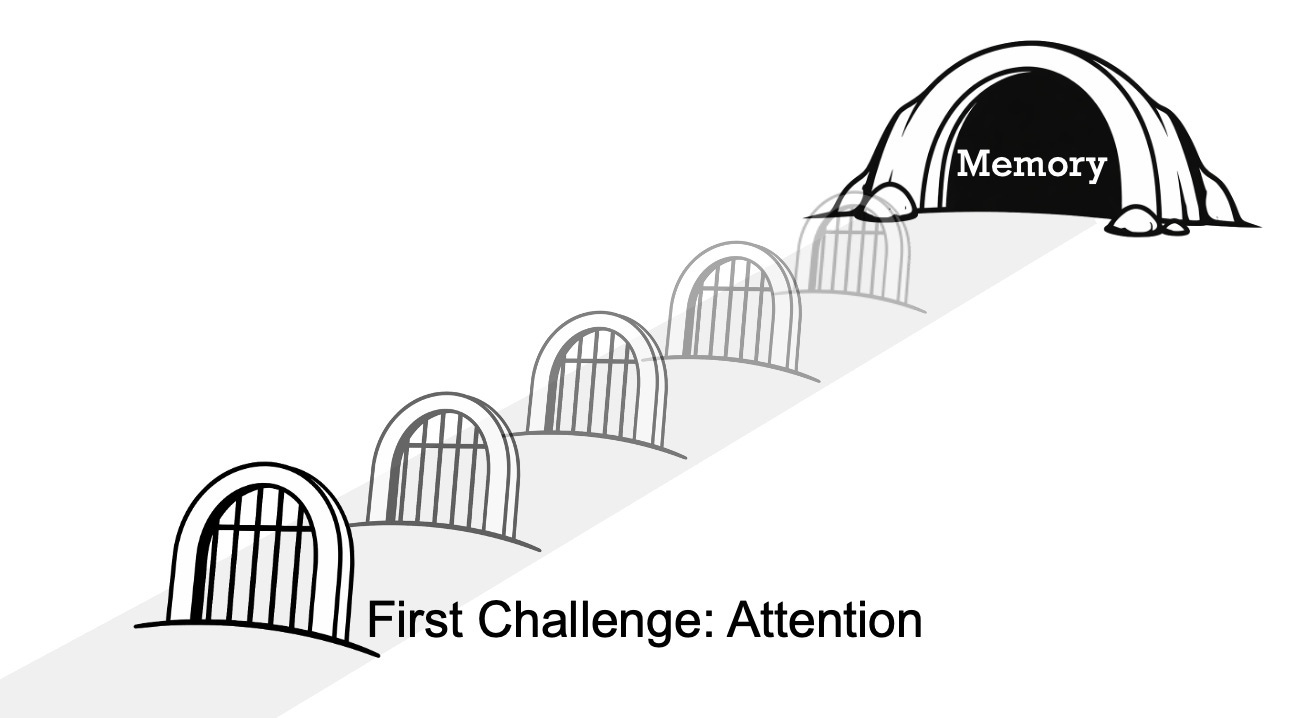
Catch up: Introducing The Gauntlet - A New Series
Meet Olivia
Olivia, a health-conscious mom of two, sits in her doctor’s waiting room. She recently had a physical and blood test and awaits the results. She shifts in the chair and goes through a mental checklist.
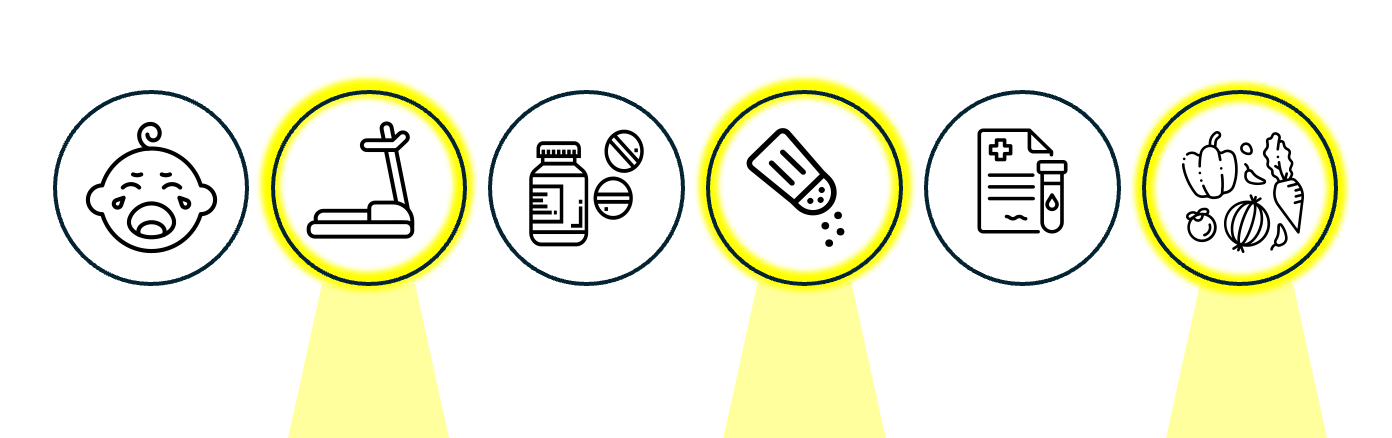
“I wonder what the blood tests will show? What meds do I need to renew? The doctor is late, which means I’m running late. Oh, I have to remember the suspicious mole. Wow, that baby next door is not happy!”
Olivia has always been data-oriented and willing to put in the work to improve. She has a good memory and feels in control of her health.
Finally, the doctor enters, and they walk through her health and the blood test results. At the end, the doctor provides recommendations and explains them by representing their knowledge in a form that works for her.
“You’ve gained a little weight. Not bad, but keep an eye on it. Try to walk more on the treadmill, and maybe try smaller portions. The mole is fine. Oh, and maybe reduce your salt intake for your blood pressure.”
Meanwhile, the baby wails. She’s running late. She’s being bombarded with distractions and new information. The doctor continues.

“Your cholesterol numbers have gone up and can lead to heart disease. You should eat more fiber because fiber helps remove bad cholesterol.”

Olivia nods and thinks to herself, “Weight, blood pressure, and now cholesterol. This sucks, but I’ve got this. It’s time take control and follow everything the doctor said.”
What Olivia doesn’t realize is that her feeling of control is mostly an illusion. Try as she might, much of the doctor’s advice is likely to be forgotten or ignored.
This isn’t because she’s lazy or in disbelief. Rather, it’s because her brain, like every human brain, has limits. It simply cannot do everything, and evolved ways to deal with incomplete or overwhelming amounts of information that appear in her sensory bubble.
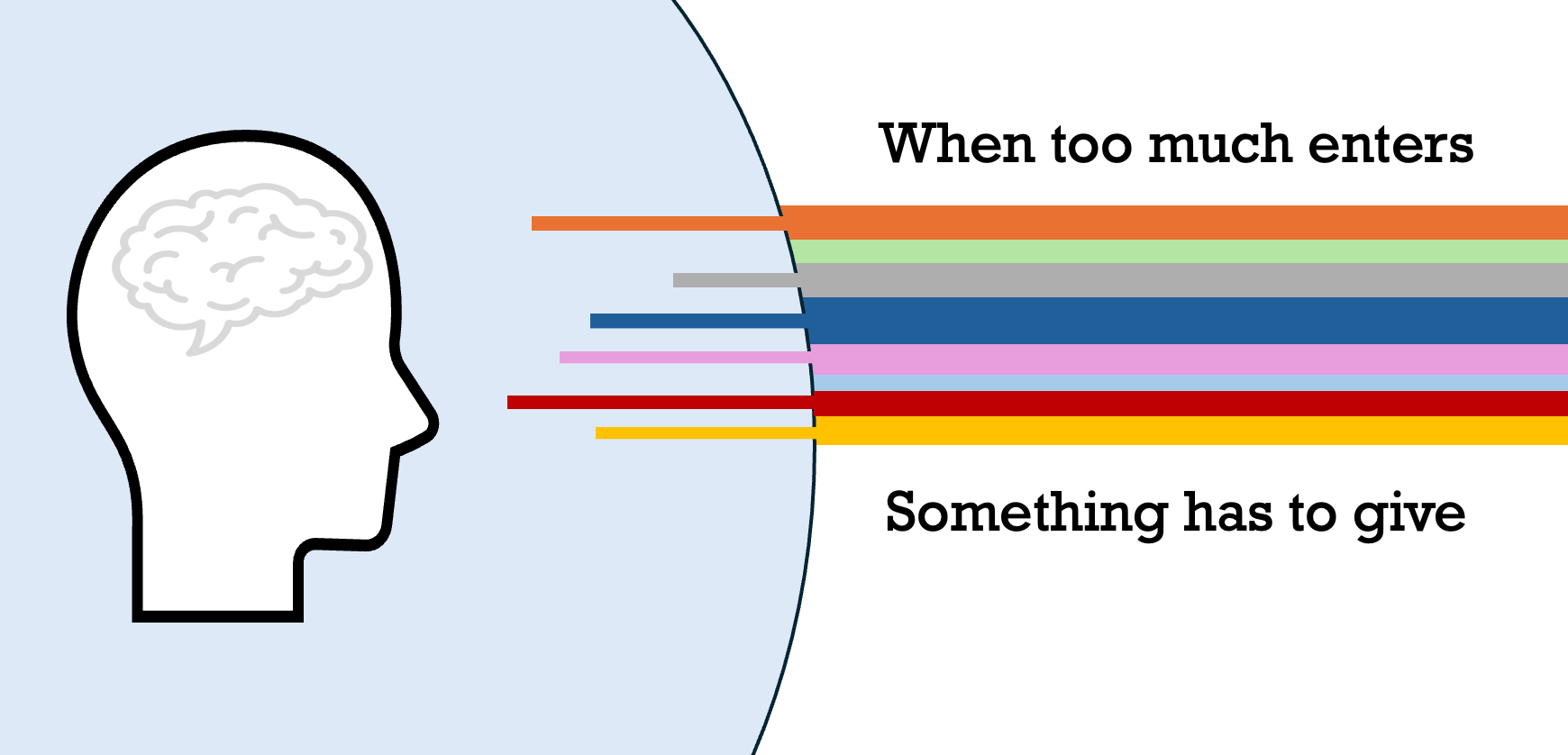
In the background, her mind is processing the doctor’s advice without her awareness or control. It’s looking for what information should be amplified versus ignored. Multiple ideas are hoping to survive in the midst of distractions and incoming information. What will make it through to her long-term memory?
Challenge 1: Limited Attention
When multiple signals enter her bubble, her mind needs to be selective. To her, it feels like she’s getting it all, but in the background, her mind is filtering what gets her attention. Nothing can pass through the gauntlet without it.
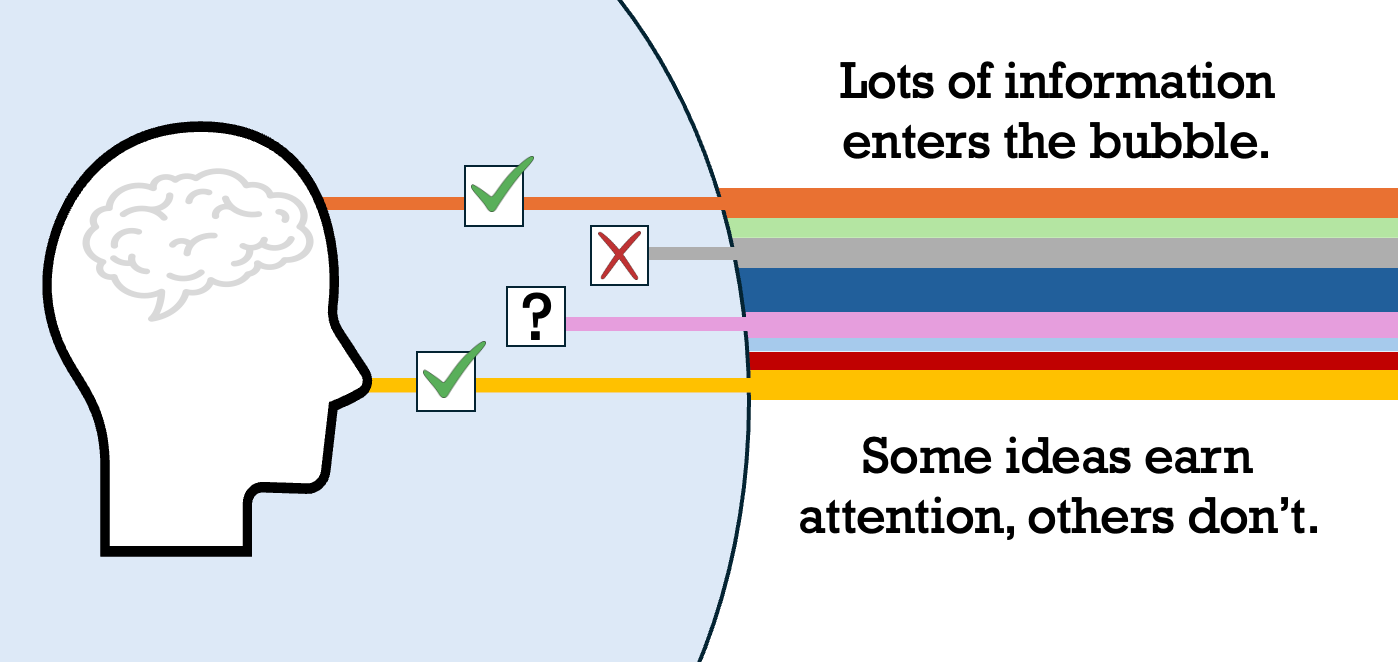
Attention happens so quickly that we don’t have to think about it. Every waking moment, our eyes, ears, and other senses pick up signals that our mind evaluates. Most of those signals stay in the background, while others become part of our consciousness.
Let’s consider another example…
Scenes from an Intersection
Imagine sitting in a car at a stoplight. You glance at the red light for a second. That’s attention. Your phone buzzes, and it’s your partner. You scan the message. That’s attention. Then you jump when the horn blares behind you because the light is green. The horn demanded your attention and earned it easily.
In this example, we see how attention moves quickly and comes in many forms. By reading these words, you are controlling your attention (called top-down processing). When you stub your toe, your attention is demanded (bottom-up processing).
Attention is our first cut at evaluating reality, and the mind processes it immediately.
What Governs Attention
Attention isn’t neutral or the same for everyone. Instead, it’s biased and highly dependent on each person’s experience and goals. It generally recognizes and processes things that are:
Threatening (horn)
New or Novel (horn)
Goal Dependent
Emotionally relevant (partner)
These priorities are ancient parts of us that evolved from our need for survival. They work in the office just as they did on the savannah.
Back to Olivia’s Experience
Weeks after the appointment, Olivia is motivated and eating a high-fiber diet. She can imagine the fiber sticking to cholesterol and removing it.
The big question: what made this advice so sticky?
The answer starts with attention. It’s the price of admission, and every idea requires it. Cholesterol got attention because it matters to Olivia. It was new information that felt like a threat to her goal of living a long life, so it lives to fight another day in the gauntlet.
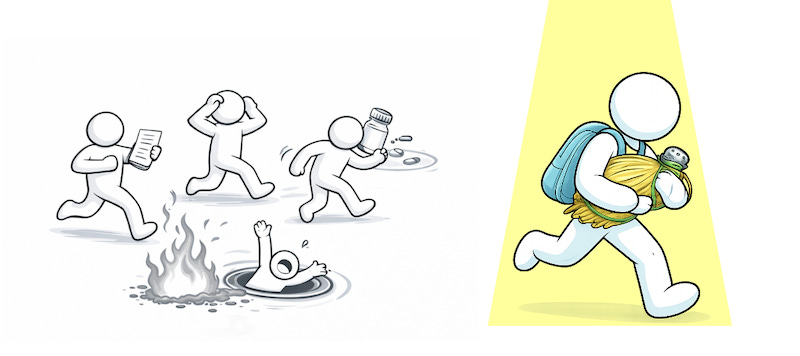
Keep in mind that attention alone is not enough. It’s only one step in the gauntlet. Later, we’ll see the same idea face new challenges on the way to long-term memory.
Let’s Zoom Out
Olivia is just one data point. Other patients may hear the exact same information and come away with different memories and goals. Why? Because our attention reflects what matters to us as individuals. Someone who is anxious about asthma may not see cholesterol as a big problem.
In all these scenarios, the mind works in a predictable way: It has limits, chooses what gets attention, and amplifies what matters.
The Lesson for Explainers
We all want our explanations to be remembered and used. For that to happen, they have to run the gauntlet of the mind, and attention is the first gate.
But here’s the problem: you can’t force attention. You can only earn it. Before your audience has made conscious decisions about your ideas, their minds have already evaluated your initial points. Your job is to align and build upon those evaluations.
This means the opening of any explanation is critical. You’re not simply persuading the audience, but appealing to a part of their biology that responds to the signal in the noise. If nothing in your first few sentences signals relevance to your audience's goals or sense of threat, their mind has already moved on.
What You Can Do
Before your next explanation, ask one question: Why would this feel urgent or relevant to this audience or person right now? Then lead with that. Not background. Not context. Focus on the thing that makes it matter to them. Threat, novelty, goals, emotions.
Olivia’s doctor did this when he said, “Your cholesterol numbers have gone up and can lead to heart disease.” Her mind saw this as a threat to something she cares about deeply: her longevity.
Next Up…
We’ll look closely at the science of attention and what mechanisms are at work when the mind encounters and evaluates new information.
If You Enjoyed This Post
Please consider hitting the ♡ button below (it helps others find it)
I’d love to hear from you. Consider leaving a comment.
I'm really enjoying the Science of Explanation work. Nice job!
Great Start - you've got my attention;)
Looking forward to the series unfold.