


We’re at a point of transition in this series. The most recent posts about attention, context, and gist are now under the umbrella of Kahneman’s System 1 or “fast” thinking. In the post below, I’m using the recurring story of Olivia to set the stage for the next phase and a deeper dive into System 2 or “slow” thinking.
Earlier in this series, I told the fictional story of Olivia at the doctor’s office. The doctor had a lot of recommendations, but she only remembered one: eat more fiber.
The driving question: Why did “eat more fiber” make it through to her long-term memory and not the other ideas?
Earning Olivia’s Attention (and Action)
When the doctor made recommendations for Olivia, her mind was engaged because her health matters to her (attention). Her existing knowledge (context) helped her evaluate what was said. This created a substrate for memory to form, but this is only the beginning. Another kind of thinking will have to do the heavy lifting.
Two Systems, Two Challenges
This quick, intuitive sort of thinking is called System 1. Every moment, System 1 rapidly interprets what we experience. It’s effortless, automatic, and makes predictable mistakes. By simply being alive, we use System 1 thinking, a capacity we share with many animals.
The reality is that it can’t process everything. Our attention is narrow and constantly shifting. The challenge: In order to think about anything at all, it must first get our attention.
The second sort of thinking, System 2, is slower and deeper. This is where we make a conscious effort to think something through. We apply reason and knowledge to construct an understanding of what we have experienced. We reflect and decide.
But it has hard limits, too. The challenge: Too much information or too many inputs can easily overwhelm System 2.
Back to Olivia
When Olivia heard the doctor’s recommendations, she assumed she’d remember to use less salt, have smaller portions, walk on the treadmill, and eat more fiber. But that didn’t happen because her mind can’t do it all.
During the drive home, Olivia reviewed the visit and one idea stood out: eat more fiber. Why? It had meaning, built on her personal context and context provided by the doctor.
This sense of meaning led to her buying high-fiber foods. This deliberate reflection is System 2 thinking, and it can create action and long-term memories.
The other recommendations didn’t make the cut. This wasn’t necessarily a conscious decision, but a matter of competing priorities and a limited ability to process everything.
The Thing About System 2
System 2 is different because it requires effort and resists being used.
In Thinking Fast and Slow, Daniel Kahneman wrote:
System 1 is gullible and biased to believe, System 2 is in charge of doubting and unbelieving, but System 2 is sometimes busy, and often lazy.
Instead of simply experiencing the world around us (System 1), we take a step back and ask why or how it happened (System 2). This is a normal part of how we think, and we all do it differently. In fact, many researchers consider System 2 to be distinctly human.
Having captured Olivia's attention and been deemed meaningful, the fiber advice became available for more deliberate thought, the kind of conscious reflection that System 2 makes possible.
A Theory with Ancient Roots
Systems 1 and 2, often called Dual Process Theory, are influential in cognitive science because they are a useful framework for thinking about the mechanics of the mind.
I think of it in terms of the question driving this project: why are we the way we are? Could our differences be partially based on how we engage these types of thinking?
Interestingly, this theory is not new. The idea that human thinking involves both fast, automatic processes and slower, deliberate ones has philosophical roots going back to ancient Greece. It became part of cognitive science in the 1970s and gained widespread awareness from Kahneman’s book Thinking Fast and Slow.
Why This Matters
In the context of explanation, Systems 1 and 2 have real power because they show that explanations can fail for two very different reasons.
Sometimes explanations never earn enough attention to be considered. Other times they earn attention but overwhelm the audience before understanding can develop.
System 1 and System 2 help explain these challenges:
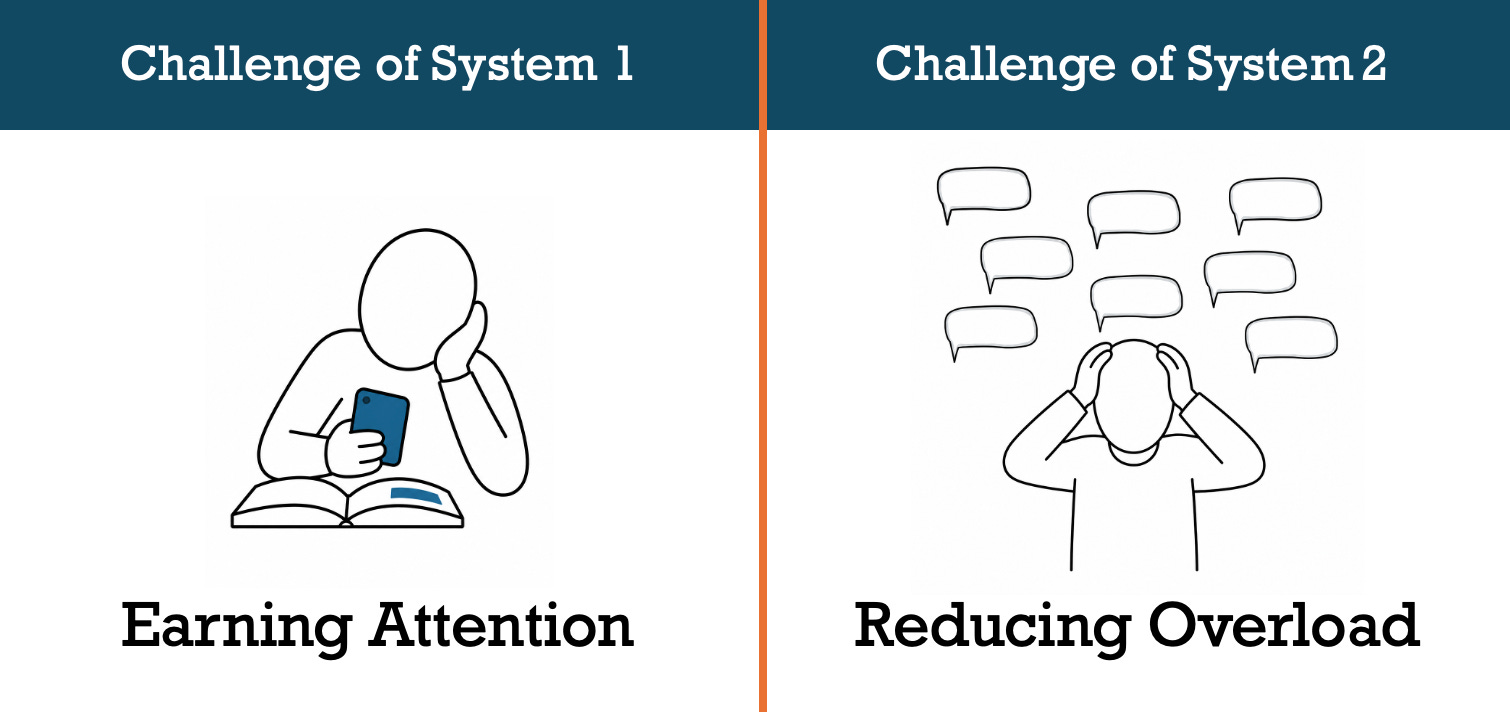
Please note that this framing is conceptual and remains controversial. The brain does not fit so neatly into systems and categories. Further, thinking doesn’t happen in a pipeline, but in a progression.
Nevertheless, there is compelling evidence that dual process theory captures important patterns in how we think.
What to Expect
Now that the basics of System 1 are in place, the elements of System 2 will become the priority.
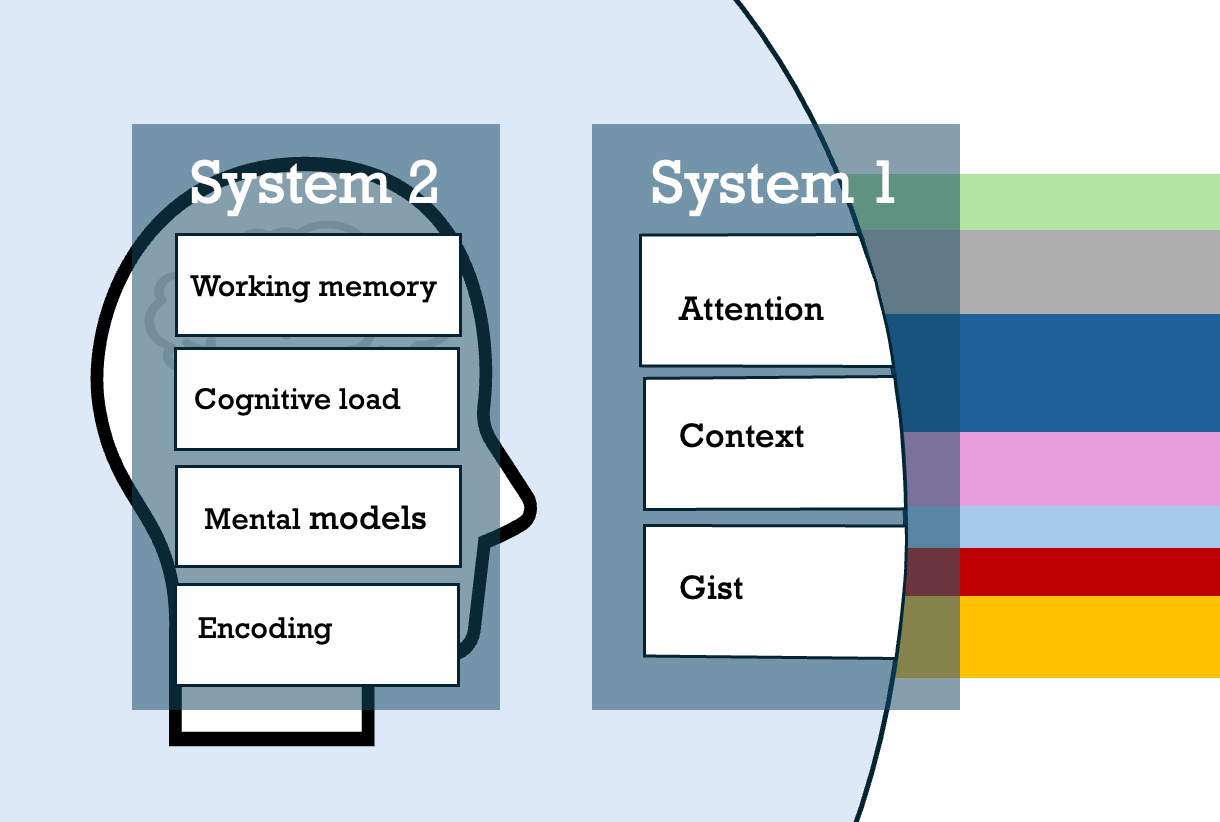
We’ll see the specific researchers and experiments that support the big ideas of System 2, like working memory, cognitive load, and more. As always, we’ll be solving a mystery: why did “eat more fiber” make it through?
If You Enjoyed This Post
Please consider hitting the ♡ button below (it helps others find this post)
I’d love to hear from you. Leave a comment, and we can chat.
Know someone who would enjoy this? This post is public, so feel free to share.