

We've Been Studying "System 1" All Along
How attention, context, and gist fit into one powerful framework

In this series, we’re following the path an idea takes as it travels from awareness to being stored in memory. By understanding the science behind this path, we can create explanations that work with the mind rather than against it.
The post below is a capstone that brings together a number of ideas under one umbrella: System 1 thinking, made famous by Daniel Kahneman.
You’re Not Always In Control
Let’s start with a famous illusion, called the Müller-Lyer illusion. Ask yourself: which horizontal line is longer?
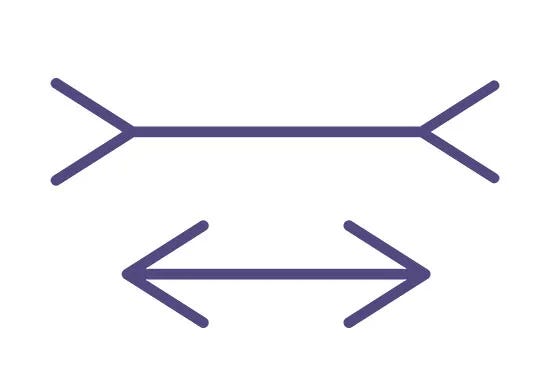
If you’re like most people, the top one appears longer. The moment you saw them, your mind automatically made a guess.
Now let’s look at them again:
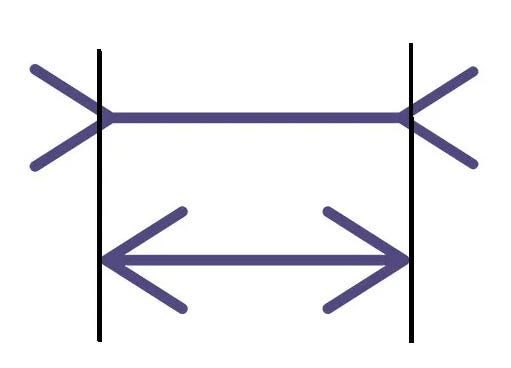
The lines are indeed the same length. Here is what’s fascinating: measuring them doesn’t change your perception of the lengths. The illusion continues to make them look different, even if you know, rationally, that they are the same.
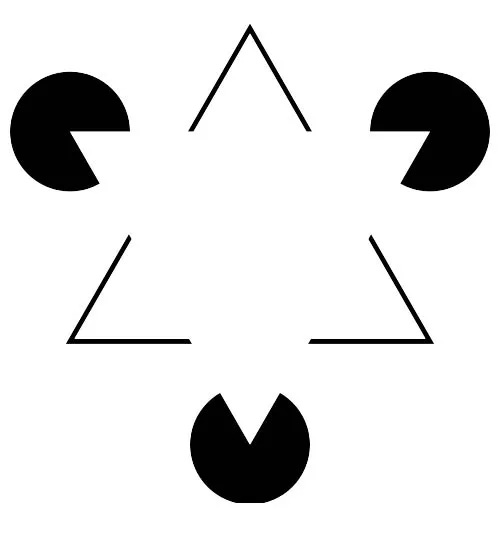
Another is the Kanizsa Triangle. Our minds automatically fill the gaps and see a triangle that does not exist.
Why Does this Matter?
These illusions show that what we see and what we know are not always the same thing. Much of what we experience happens automatically, before conscious thought has a chance to weigh in.
The illusions above are simple examples of how the mind constructs experience. In the blink of an eye, attention is captured, context is applied, and a gist begins to form. By the time we start thinking consciously, much of the work has already been done.
Where We’ve Been
For months, I’ve studied the path information takes when it enters the mind and why only a fraction of it becomes stored in memory.
The research led me to learn about the sensory bubble that we all live within, and how, by simply being human, we have limits on what we can experience.
I learned about the science of attention and how it is earned.
I studied the powerful role that context plays in our perceptions.
Last week, I covered gist processing and how an idea or concept forms in milliseconds.
These all happen simultaneously when something new arrives in our bubble and sets the stage for deeper processing.
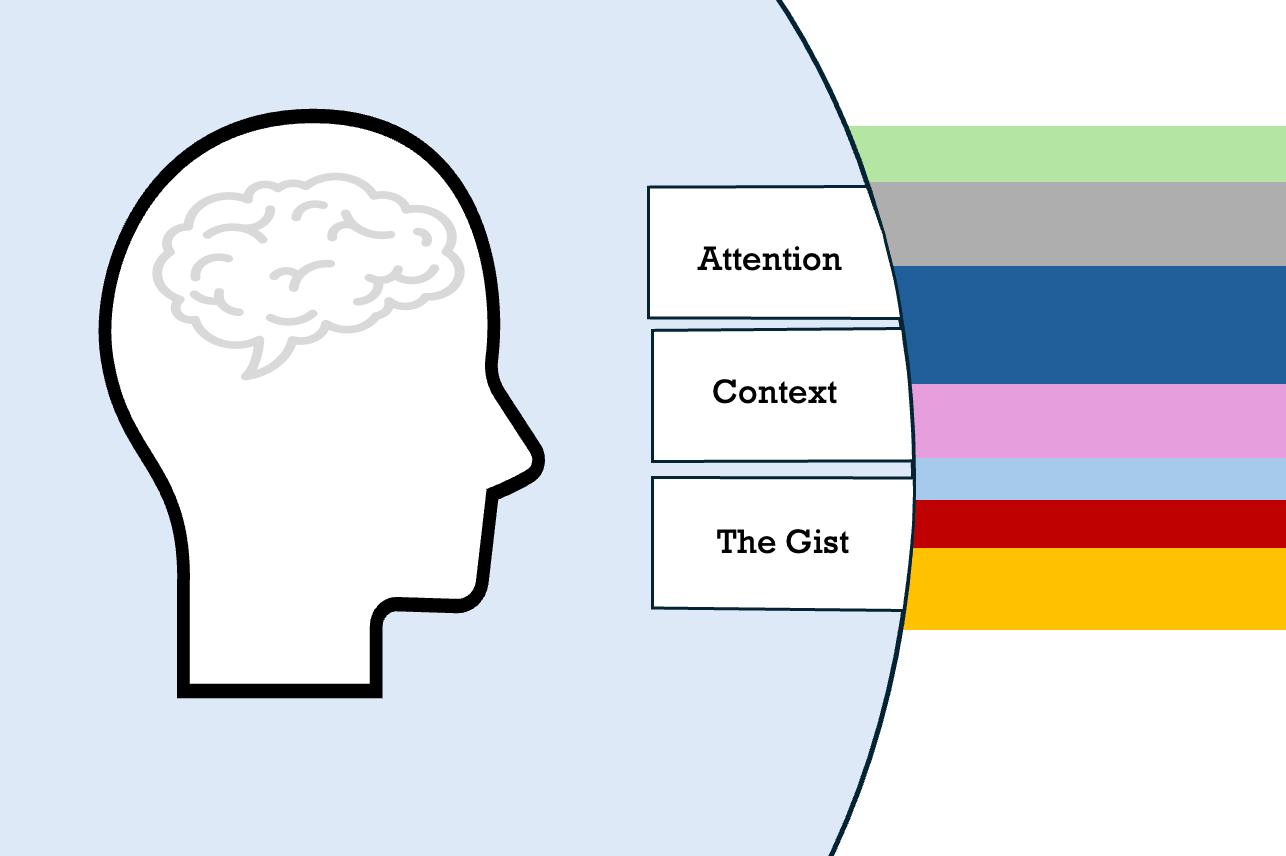
And in some cases, the information makes it through and has a chance of being stored in memory. The question is: Why? Why do some ideas make it through?
Daniel Kahneman and the Linda Problem
Daniel Kahneman won the Nobel Prize in 2002 for his work in fusing psychology and economics. He and his collaborator, Amos Tversky, conducted experiments that showed how the mind makes decisions under pressure or uncertainty.
What they found upended the dominant beliefs about rationality and how we interpret information. For example, they showed that the human mind uses mental shortcuts (heuristics) that lead to predictable errors in judgment.
A famous experiment, called The Linda Problem, shows this clearly. In the study, participants were given the following description of a fictional woman named Linda:
“Linda is 31 years old, single, outspoken, and very bright. She majored in philosophy. As a student, she was deeply concerned with issues of discrimination and social justice, and also participated in anti-nuclear demonstrations.”
Participants were then asked which of the following two statements was more probable:
Option A: Linda is a bank teller.
Option B: Linda is a bank teller and is active in the feminist movement.
85% to 90% of participants chose Option B. It appears to make logical sense. But it’s a mistake.
The probability of “B” can never be higher than “A”.
Why? Because “B” violates a fundamental law of probability: the probability of two events occurring together (in conjunction) can never be greater than the probability of one of the events occurring alone.
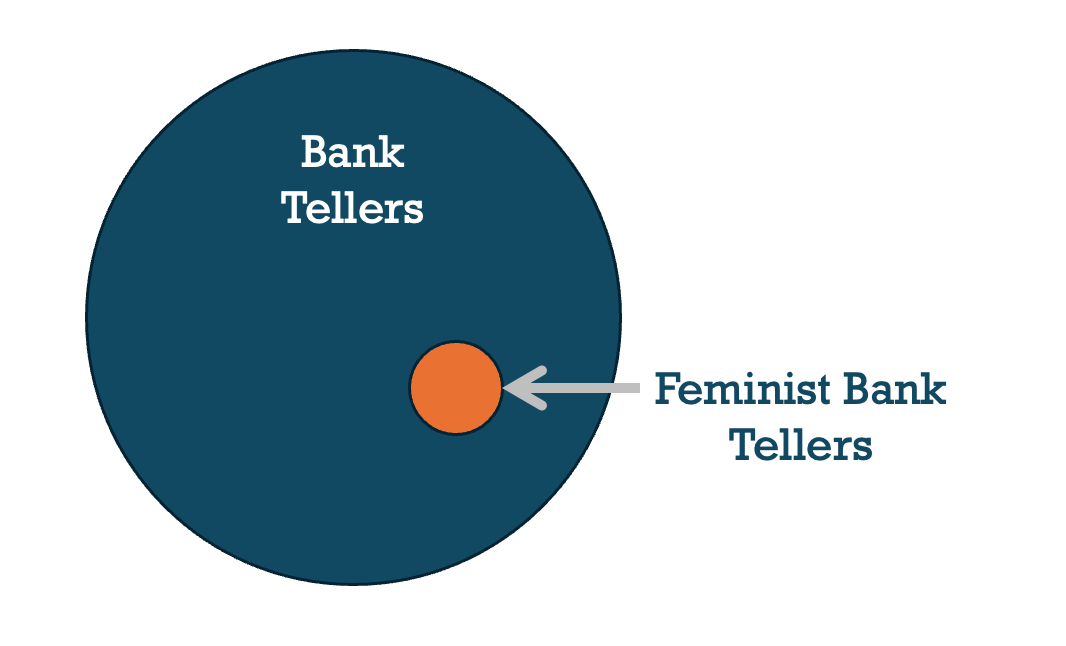
Why the Linda Problem matters
In this example, we see how context and gist shape our thinking. The Linda Problem shows that people do not reason directly from information; we reason from the meaning we construct from that information.
We quickly think: “Linda is an outspoken activist, therefore it’s more probable that she’s a feminist bank teller.”
The mistake feels reasonable because the description of Linda creates a compelling story. Rather than evaluating probability directly, we rely on the gist we formed from the details. The story feels right, so the answer feels right.
Kahneman showed that these errors happen in a wide variety of situations. We constantly rely on rapid judgments to make sense of the world, and while they are often useful, they can also lead us astray in predictable ways.
The Big Picture: Systems 1 and 2
In his groundbreaking book, Thinking Fast and Slow, Kahneman described two ways we think:
System 1: Immediate, automatic, pre-rational (fast)
System 2: Rational, effortful, logical (slow)
This framing provides a powerful way to think about the science of explanation and the gauntlet of the mind. I’ll refer to it often going forward because it’s one of the most influential frameworks in cognitive science and useful way to think about how information travels in the mind.
We’ve Now Covered Most of System 1
The big ideas we’ve covered up to now are usually considered part of System 1; the “fast” form of thinking in terms of attention, context, and gist. The snapshots from System 1 generally work, but are prone to errors and mistakes. This reality will ripple through the rest of the research.
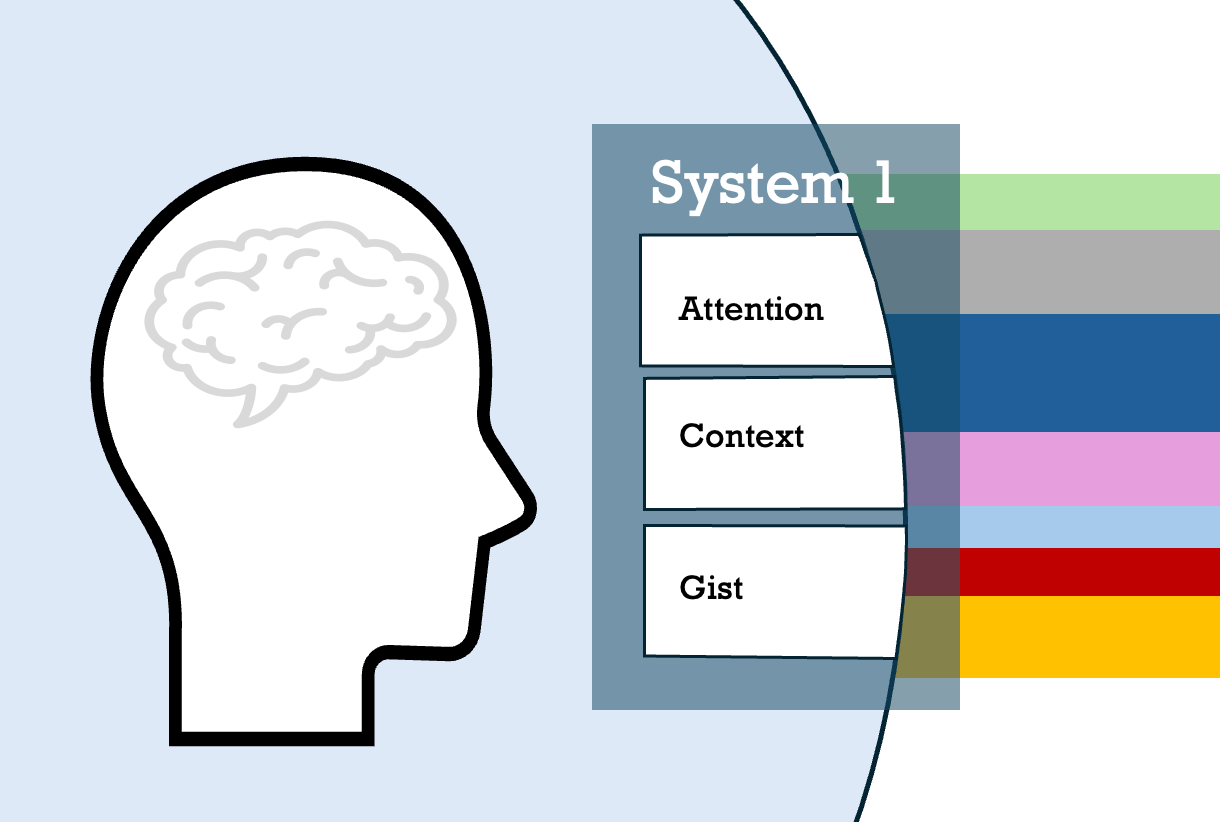
Next up: System 2
When new information makes it through System 1, it faces new challenges in System 2, where it must survive with working memory, cognitive load, mental models, encoding, and more. This is the slow part of thinking, and there’s a lot to cover.
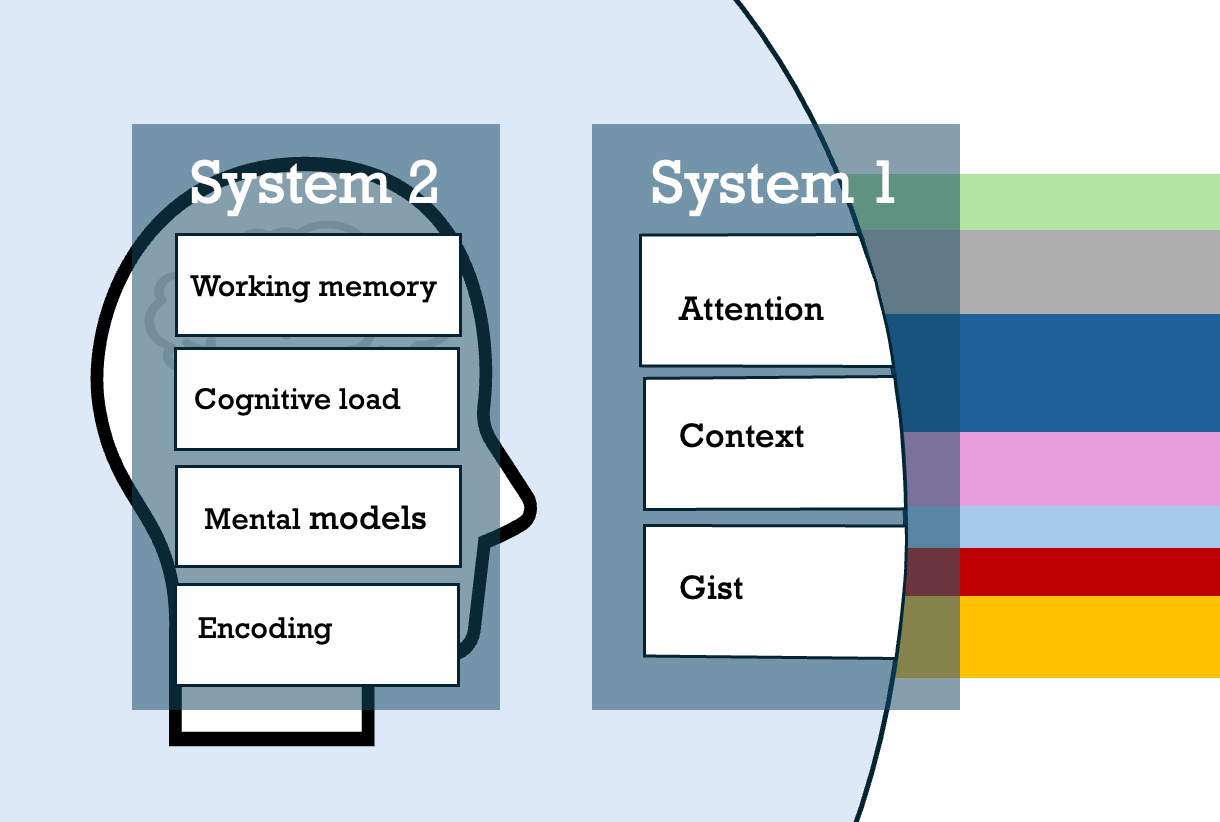
If System 1 acts as the gatekeeper, System 2 acts as the builder. One determines what gets through. The other determines what becomes knowledge. That’s where explanation really lives. We’ll continue to follow an idea through the gauntlet and look at the science behind what we know and how we know it.
If You Enjoyed This Post
Please consider hitting the ♡ button below (it helps others find this post)
I’d love to hear from you. Leave a comment, and we can chat.
Know someone who would enjoy this? This post is public, so feel free to share.
Really enjoying this series, Lee.
I’ve always found the Linda experiment a bit odd. When given a detailed description, I assume the details matter and try to use them—there’s no option like “Not enough information“
So I wonder how much of the result reflects reasoning errors versus people simply trying to interpret why those details were included.
If you were a participant, which answer would you choose?